Eco-Friendly Baby Products: A Parent’s Guide
Let's cut through the noise. If you've landed on this eco friendly baby products guide, you're probably staring at a mountain of bamboo onesies, "plant-based" diapers, and wooden toys, wondering what's actually worth your money and what's just clever marketing. The honest answer is that raising a baby sustainably isn't about buying every green product on the shelf.
It's about understanding which choices genuinely reduce waste, which certifications actually mean something, and where your specific lifestyle makes certain swaps practical.
The reality is sobering. The average baby in the United States goes through around 2,500 to 3,000 diaper changes before potty training, and the EPA estimates that roughly 20 billion disposable diapers end up in landfills every year. That's the equivalent of about 3.5 million tons of waste annually, and those diapers take centuries to decompose.
But here's the thing: the "eco-friendly" baby market is now a multi-billion dollar industry, and not all of it is honest. GOTS certification, OEKO-TEX Standard 100, and FDA-compliant food-grade silicone are the benchmarks that matter. Everything else is often just a label designed to make you feel better while your wallet gets lighter.
The Real Question: What Does "Eco-Friendly Baby" Actually Mean?
Here's the uncomfortable truth: there's no such thing as a perfectly sustainable baby product. Every single item you buy, whether it's organic cotton or recycled plastic, has an environmental footprint. The real question isn't "is this product green?" It's "does this product reduce overall impact compared to the conventional alternative?"
When we talk about eco-friendly baby products, we're really talking about three pillars. First, materials: what is this item actually made from, and where did those raw materials come from? Second, longevity: will this product last through one child, or can it be passed down, resold, or composted?
Third, usage habits: how much water, energy, and detergent does this product require over its lifetime? A cloth diaper stash sounds great, but if you're running small loads on hot water with specialty detergent, you might be trading landfill waste for water waste.
The greenwashing problem is real. A diaper marketed as "plant-based" might still contain petroleum-derived superabsorbent polymers. An "organic cotton" onesie might be GOTS-certified, or it might just have a cute leaf on the tag with no certification behind it.
Our research shows that parents who focus on certifications over marketing claims end up making better choices, and often save money, because they're not paying a premium for empty promises.
The Three Layers of a Genuinely Eco-Friendly Choice
Think of it this way: every baby product sits on a spectrum. On one end, you have products designed to be used once and thrown away. On the other, you have products built to last through multiple children.
Most real-world choices fall somewhere in between, and that's okay.
The material layer is what most people focus on. Organic cotton, bamboo viscose, natural rubber, food-grade silicone, and solid untreated wood are all genuinely better than their conventional counterparts. But here's the catch: "better" doesn't always mean "best." Bamboo viscose, for example, is often marketed as ultra-sustainable, but the manufacturing process to turn bamboo into soft fabric is chemically intensive.
It's still better than conventional cotton, but it's not the environmental superhero some brands claim.
The longevity layer is where the real wins happen. A solid wood toy that lasts through three kids and then gets passed to a cousin is worth more, environmentally speaking, than five "recyclable" plastic toys that each break within months. The same logic applies to cloth diapers, glass bottles, and wool diaper covers.
If it lasts longer, it's almost always greener.
Quick Answer
An eco-friendly baby product minimizes environmental impact through certified sustainable materials, durable construction, and reduced single-use waste. Focus on GOTS-certified organic cotton, food-grade silicone, glass, and untreated solid wood. Prioritize longevity over novelty.
Buy used when possible. The greenest diaper is the one you already own, whether cloth or disposable, because manufacturing new products carries hidden costs.
Quick Decision Tree: Match Products to Your Life
Before you buy anything, ask yourself three questions. What does your laundry situation look like? What's your realistic budget for the first year?
And how much time are you willing to invest in maintenance? Your answers will determine whether cloth diapers make sense, whether glass bottles are practical, and whether you should buy new organic or used conventional.
Branch 1: Diapers — Cloth, Eco-Disposables, or Hybrid?
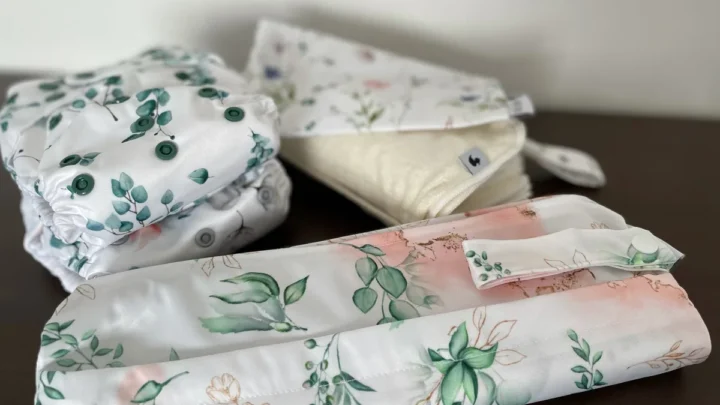
If you have an in-unit washer and dryer, cloth diapers are almost always the most environmentally friendly choice. A full stash of two dozen all-in-one diapers will cost you somewhere between $400 and $800 upfront, but that investment replaces roughly $1,200 to $1,800 in disposable diapers over two and a half years. If you have a baby with sensitive skin, this is often the best route, as you can read about in our sensitive skin diaper comparison.
If you're in an apartment with shared laundry, cloth suddenly becomes much harder. Hauling wet diapers to a communal laundry room is exhausting, and the water use gets murky. In that case, eco-disposable options like bamboo-based diapers are the pragmatic choice.
They're not perfect, but they're better than conventional petroleum-based brands. And if you're somewhere in between, a hybrid system works: cloth at home, disposables for daycare and travel.
Branch 2: Feeding — Glass, Silicone, or Recycled Plastic?
For bottles, glass wins on environmental impact and safety, but it has real downsides. It's heavy, and toddlers have a remarkable talent for throwing things. If you have hard floors and a baby who likes to test gravity, silicone sleeves become essential.
The trade-off is that glass bottles can easily last through multiple children, while plastic bottles, even BPA-free ones, degrade with repeated sterilization and should be replaced.
Food-grade silicone is the middle ground. It's durable, lightweight, and completely non-toxic, but it's not biodegradable. The question becomes whether the longevity justifies the material.
For teethers and pacifiers, natural rubber is genuinely biodegradable, but it doesn't last as long and can harbor mold if not dried properly.
Branch 3: Nursery — New Sustainable or Used Conventional?
Here's where we challenge a lot of people's assumptions. A used conventional crib made from solid wood is often greener than a new "sustainable" crib, because the biggest environmental cost in furniture is manufacturing and shipping, not the raw material. If you can find a used solid-wood crib in good condition, you're saving that entire carbon footprint.
The same logic applies to dressers, changing tables, and bookshelves.
The one thing you should never buy used is a crib mattress. There are two reasons. First, regulations have changed significantly over the years, and older mattresses may not meet current safety standards.
Second, you have no way of knowing what's inside a used mattress, and the risk of mold, bacteria, or compromised structural integrity isn't worth it. New mattresses that are GREENGUARD Gold certified or made with organic latex and wool are the safest bet.
Branch 4: Clothing & Gear — Buy New Organic or Buy Used?
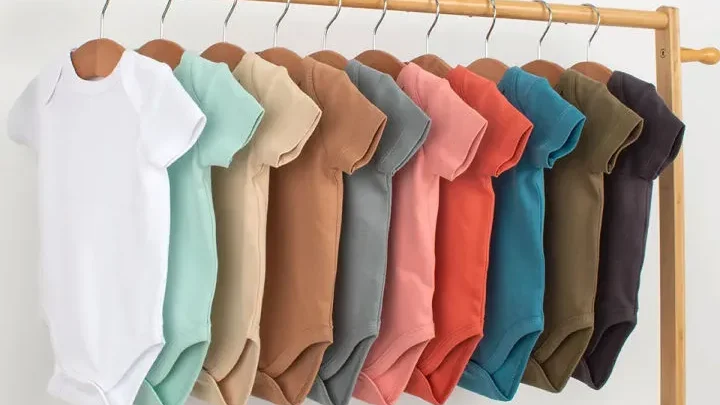
For clothing, a mix approach works best. Organic cotton is genuinely better for sensitive skin, and GOTS certification ensures that workers and the environment are treated fairly. But babies outgrow clothes in weeks, not months.
A used organic cotton onesie is the holy grail: you get the material benefits without the manufacturing footprint. Check local buy-nothing groups, consignment shops, and online marketplaces before buying new.
For gear like strollers, carriers, and high chairs, the calculus is simple. Buy used unless there's a specific safety feature you can't get secondhand. Modern strollers are built to last, and a used high-end model beats a new budget model for durability.
The exception is car seats, which you should never buy used because you can't verify their accident history.
Diapers: The Heaviest Environmental Choice You'll Make
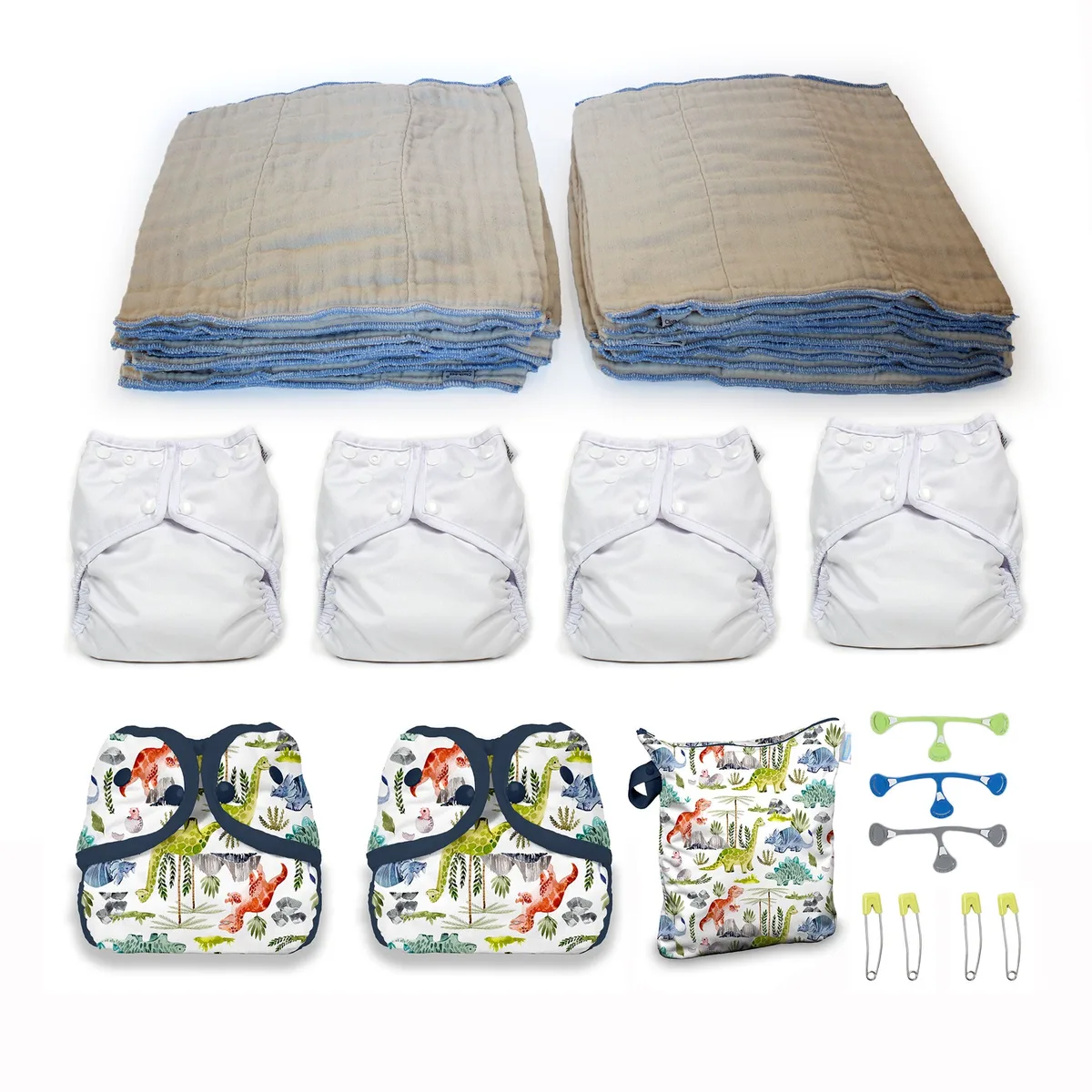
Your diaper choice is the single biggest environmental decision you'll make as a new parent. Nothing else comes close. Between birth and potty training, the average baby uses somewhere between 4,000 and 6,000 diapers, and each one that goes to a landfill takes roughly 250 to 500 years to decompose.
That's not a typo. The plastic in conventional diapers will outlive your grandchildren.
Cloth Diapers: Up-Front Cost, Laundry Reality, Lifespan
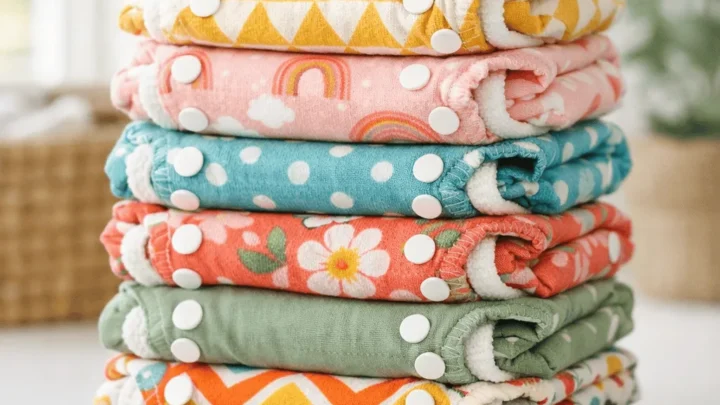
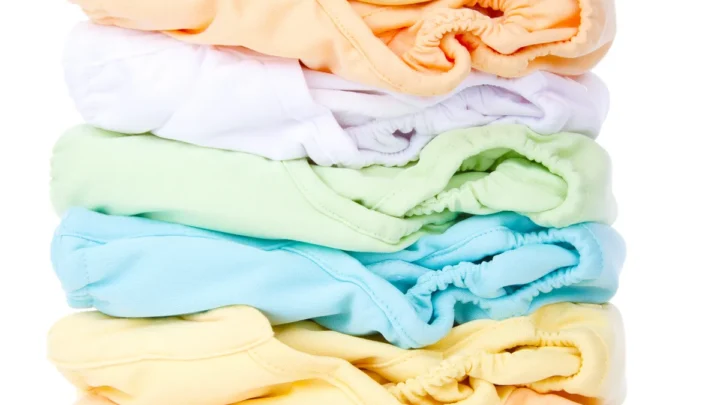
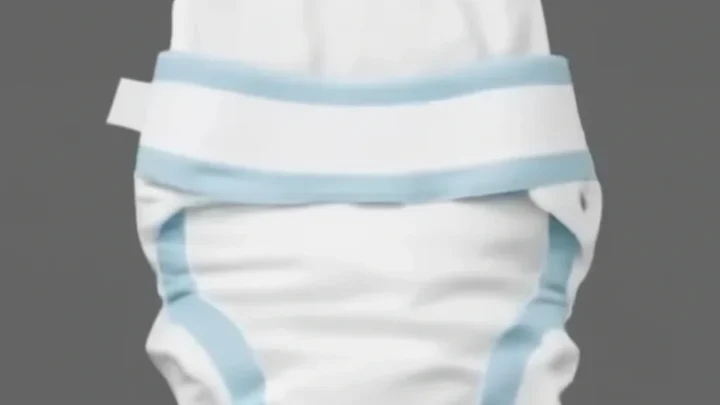
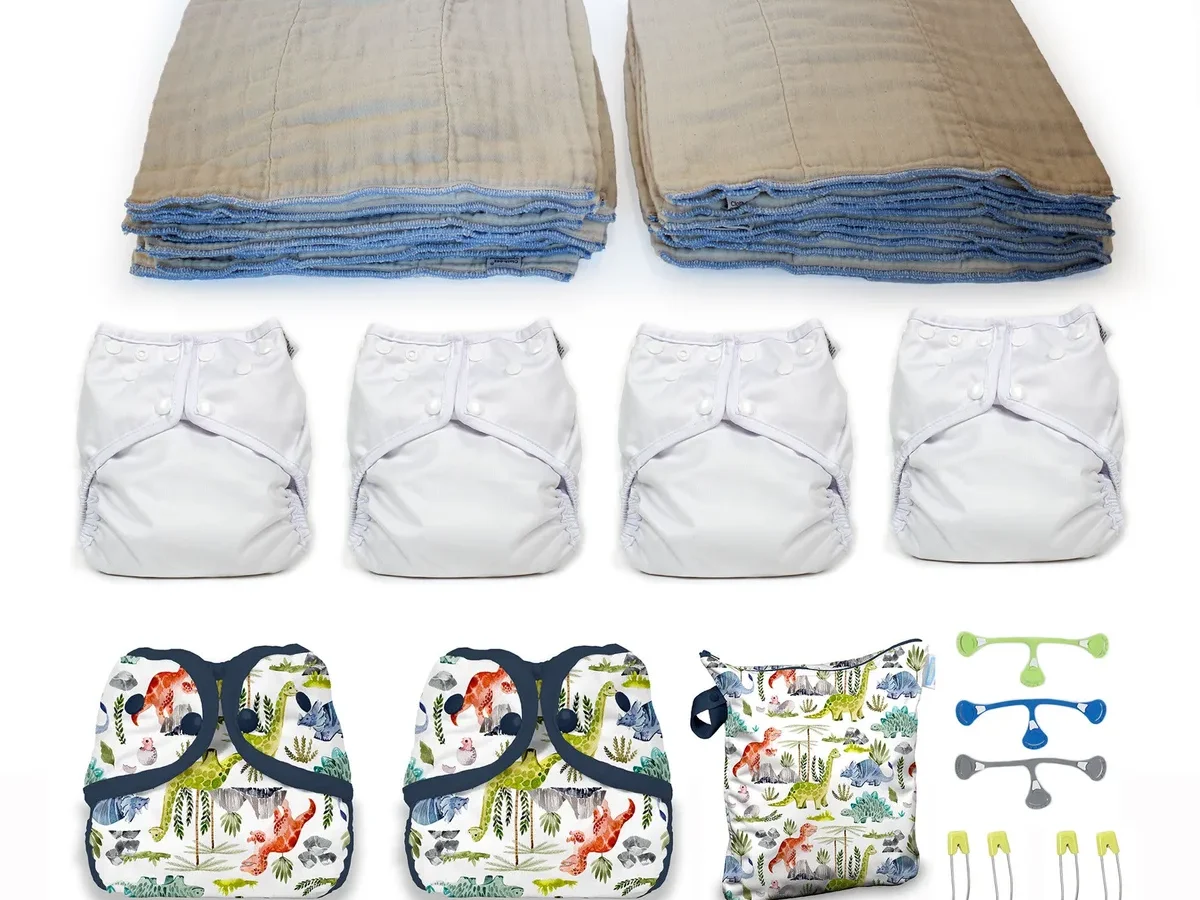
Cloth diapers come in several styles, and the differences matter. Pockets are the most popular because they're easy to stuff and dry relatively quickly. All-in-ones are the most convenient but take forever to dry and cost more per diaper.
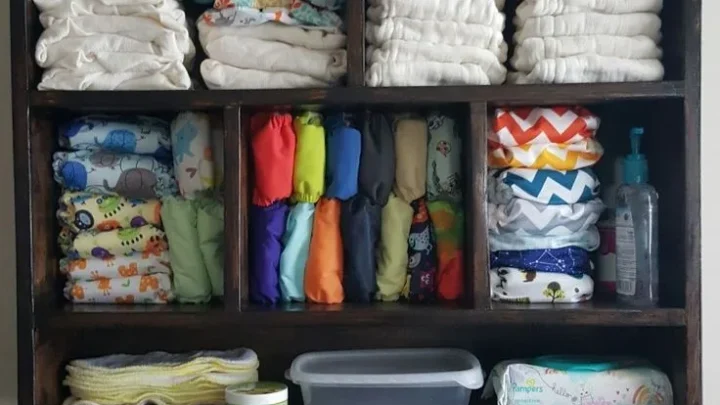
Prefolds and flats are the old-school option, and they're dirt cheap, but they require covers and more folding skill. If you're starting fresh, most parents find that a stash of 24 to 36 diapers is workable, and that means washing every two to three days.
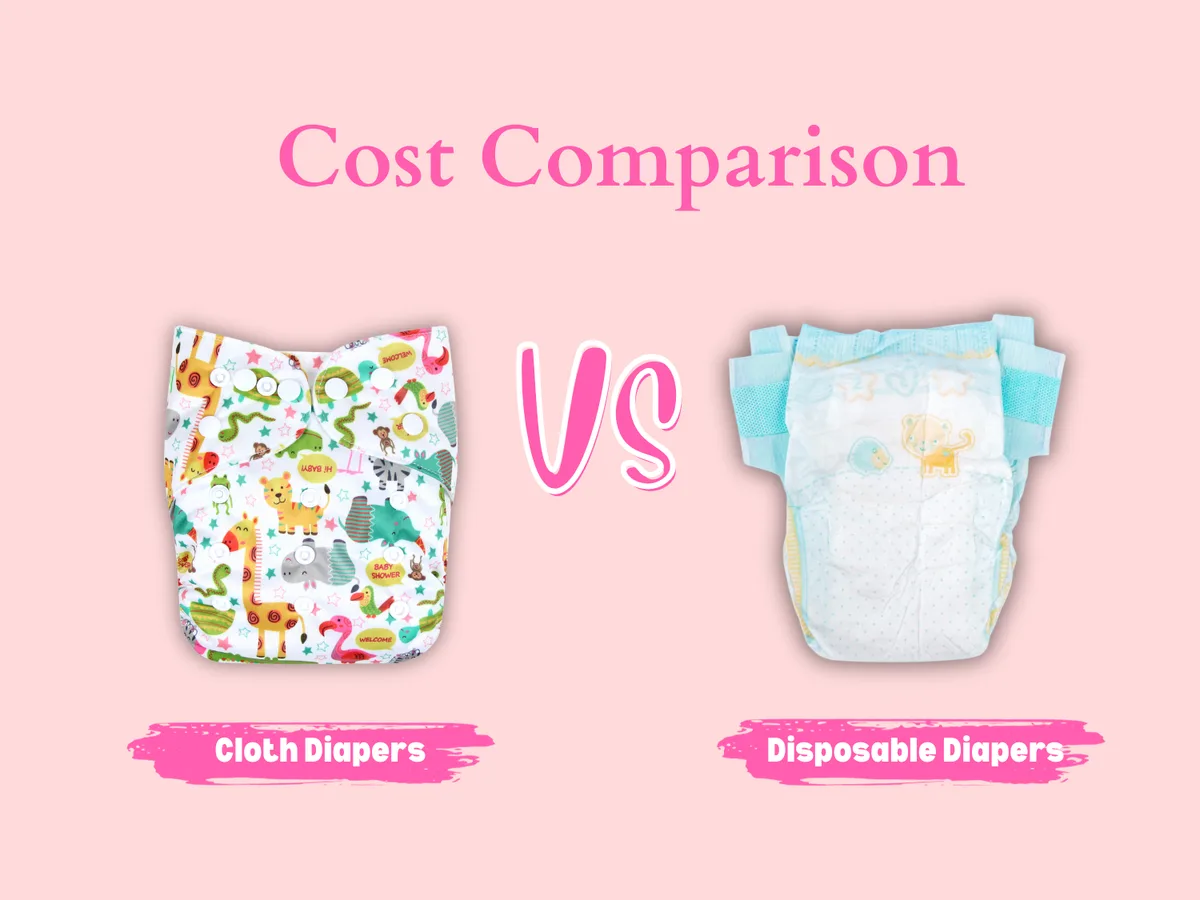
The laundry routine is real. A cold pre-rinse, then a hot main wash with extra rinse, on a heavy-duty cycle. That's roughly two loads every other day, and your water bill will reflect it.
But here's the math: even accounting for the extra water and energy, cloth diapers still come out ahead of disposables on most environmental metrics. The key is washing full loads and line-drying when possible. If you're using a dryer on high heat for every load, you're erasing much of the benefit.
The lifespan of cloth diapers is their superpower. A well-maintained stash from a reputable brand like Thirsties or BumGenius will last through two or even three children. When you're done, they still have resale value.
Worn-out diapers can be repurposed as cleaning rags or, if they're natural fiber, composted. For hard water concerns, we have a detailed stripping guide that covers the mineral buildup problem and how to fix it.
Eco-Disposable Options: Better but Not Perfect
If cloth isn't practical, eco-disposables are the next best thing. Brands like Bambo Nature, Dyper, and Eco by Naty use plant-based materials and avoid chlorine bleaching and fragrances. Some are even certified compostable.
But here's the catch: "compostable" and "biodegradable" are not the same thing. Biodegradable means it will eventually break down, but that could take decades in a landfill. Compostable means it breaks down quickly, but only if it actually reaches an industrial composting facility.
Most municipal waste systems don't compost diapers. So even the most eco-friendly disposable will likely end up in a landfill, it just won't sit there for 500 years. It's a meaningful improvement, but it's not a perfect solution.
If you're reading our guide and trying to decide, here's our honest advice: if you can commit to cloth even part-time, do it. If you can't, choose an eco-disposable and don't let perfect be the enemy of good. And whatever you choose, you can pack them efficiently with our zero-waste diaper bag tips.
Cost-Per-Use Breakdown at 24 Months
| Diaper Type | Upfront Cost | Monthly Cost | Total at 24 Months | Environmental Impact |
|---|---|---|---|---|
| Cloth (all-in-one) | $400–$800 | $15–$25 (laundry) | $760–$1,400 | Low (after initial impact) |
| Eco-disposable | $0 | $80–$120 | $1,920–$2,880 | Medium |
| Conventional disposable | $0 | $70–$100 | $1,680–$2,400 | High |
| Hybrid (cloth + disposable) | $200–$400 | $40–$70 | $680–$2,080 | Low-Medium |
Costs based on manufacturer pricing and typical usage rates as of 2026. Your mileage may vary based on brand, washing efficiency, and how often you switch brands.
The hybrid approach is worth serious consideration. Using cloth at home and disposables for travel and daycare cuts your landfill contribution roughly in half while keeping the laundry manageable. Most parents who start full-time cloth eventually drift toward a hybrid system anyway.
Why not start there and save yourself the trial-and-error period?
The "Heavy Wetter" Problem and How It Changes Your System
If you get a heavy wetter, and many babies qualify, you'll discover this quickly. Cloth diapers that worked fine for one baby will leak constantly for another. The solution usually involves adding absorbency, either through bamboo or hemp inserts, or switching to a different diaper style entirely.
Bamboo inserts are a popular choice because they absorb more than cotton per ounce. They're made from bamboo viscose, and while the manufacturing process has environmental costs, the absorbency benefit is real. Hemp is even more absorbent and lasts longer, but it's bulkier and takes more washes to reach full absorbency.
If you're using cloth with a heavy wetter, budget for extra inserts and don't be afraid to switch brands or styles. What works for your friend's baby might not work for yours.
Feeding Essentials: Bottles, Teethers, and Plates
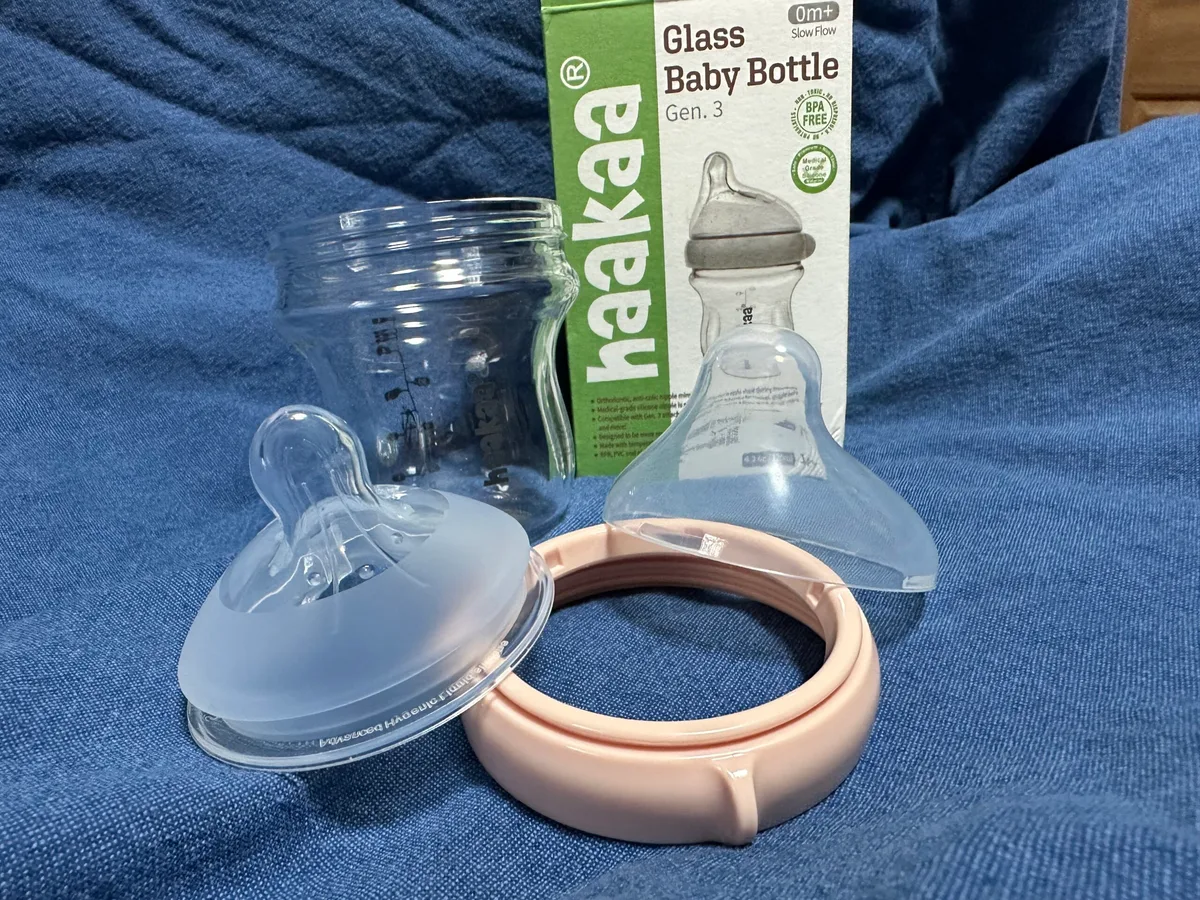
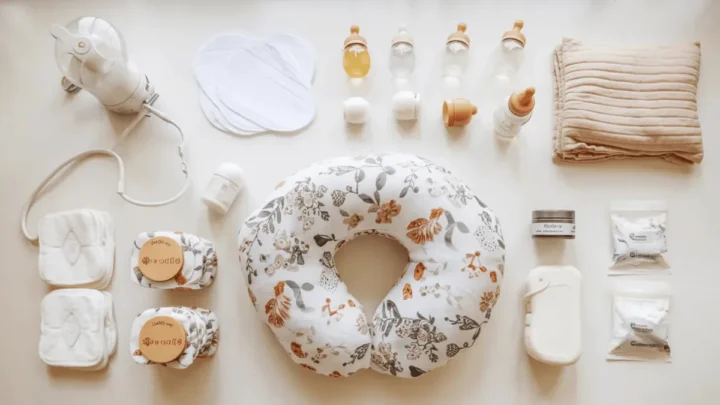
Feeding is the second-biggest source of baby waste, and it's the area where "eco-friendly" claims get the most confusing. You'll see bottles made from glass, silicone, Tritan plastic, and recycled polypropylene. You'll see teethers made from natural rubber, silicone, and wood.
And you'll see plates and bowls in every material imaginable. The goal is to avoid materials that leach chemicals into food while minimizing single-use plastic waste.
Glass Bottles: Durability and Drop-Test Reality
Glass bottles are the gold standard for environmental safety. They're completely inert, meaning they don't leach any chemicals into milk or formula. They're also virtually indestructible in terms of the material itself, glass doesn't degrade or cloud.
A set of glass bottles can easily last through multiple children, and when you're done, they can be recycled indefinitely.
The downsides are real, though. Glass is heavy, and when a toddler hurls a bottle onto tile, it will eventually break. The solution is to buy glass bottles with silicone sleeves.
These sleeves protect the bottle and provide grip, and they're removable for washing. Brands like LifeFactory and Philips Avent offer this design. The additional cost is worth it, because you won't be replacing bottles every few months.
If you're wondering whether silicone bottles are a better middle ground, they are. Silicone is soft, lightweight, and practically unbreakable. But it's more expensive than glass, and it's not biodegradable.
Like we discussed with feeding sets, the "biodegradable" question is more complex than it seems. Our article on silicone bibs and biodegradability goes into detail, but the short version is that silicone is durable and should be kept out of the waste stream for as long as possible.
Silicone vs. Natural Rubber for Teethers and Nipples
This is a common question, and the answer depends on what you prioritize. Natural rubber, also called latex, is biodegradable and made from tree sap. It's a genuinely renewable resource.
But it degrades faster than silicone, especially when exposed to sunlight or frequent sterilizing. Natural rubber teethers also have a distinct smell, and some babies have latex allergies.
Silicone is synthetic, derived from sand and petroleum products, but it's completely non-toxic and doesn't degrade. It's also hypoallergenic and doesn't have any taste or smell. For teethers, silicone is arguably the better choice for most families because it's safer for babies with allergies and lasts longer.
If you're passionate about renewable materials, natural rubber is a fine choice, just be prepared to replace teethers more frequently and inspect them regularly for signs of wear.
What Those Certifications Actually Guarantee (and Don't)
The certification alphabet soup is confusing, and some seals are more meaningful than others. Here's what you need to know.
- GOTS (Global Organic Textile Standard): This is the real deal for textiles. It covers the entire supply chain, from harvesting to manufacturing, and ensures fair labor practices. If you see GOTS on clothing or cloth diapers, it means organic fiber content and safe processing.
- OEKO-TEX Standard 100: This tests for harmful substances in textiles and materials. It's a good baseline, but it doesn't mean organic. It means no lead, phthalates, or other nasties.
- FDA Food-Grade Silicone: This means the silicone meets FDA standards for food contact. It's important for bottles, teethers, and feeding accessories.
- GREENGUARD Gold: This certifies low chemical emissions for indoor products like mattresses and furniture. It's particularly important for items where your baby will spend extended time.
- CPSIA Compliance: This isn't a third-party certification. It's a US law that prohibits lead and phthalates in children's products. Every product sold in the US must comply, so it's a floor, not a ceiling.
High-Chair and Bowl Choices That Survive Toddlers
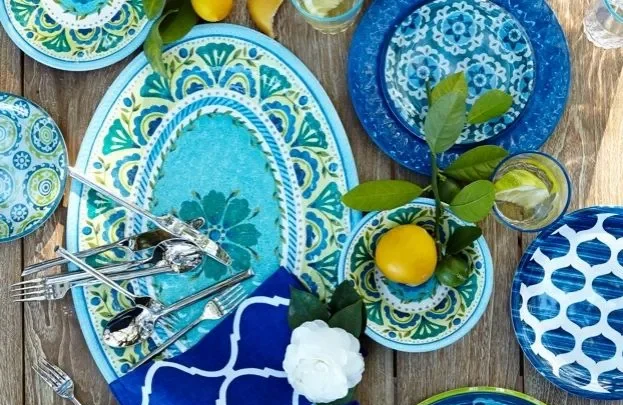
For plates, bowls, and utensils, the most eco-friendly option is stainless steel with a silicone base or cover. Stainless steel is durable, non-toxic, and infinitely recyclable. It's also lightweight enough for toddlers.
The problem is that metal is loud when dropped, so silicone rims help. Brands like Ahimsa and EZPZ make steel plates with silicone bases that stick to tables for newborns, they're worth the investment.
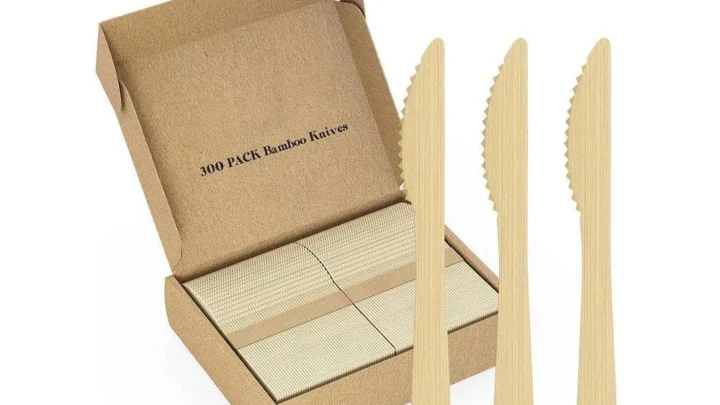
Avoid bamboo plates and bowls marketed as "eco-friendly." They're often coated with melamine resin, which can leach formaldehyde and melamine into food, especially when exposed to heat. Melamine is not safe for baby food. If you see bamboo or wheat-straw plates, check the fine print about coatings.
If they're coated, they're not the healthy choice they claim to be.
Nursery, Clothing, and The Secondhand Trap
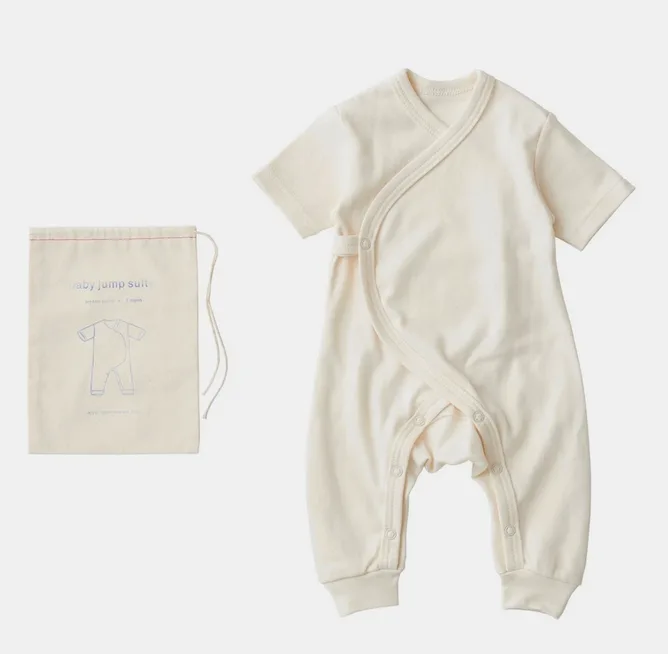
The nursery is where parents tend to overspend on "sustainability." You can drop three thousand dollars on a solid-wood crib, a non-toxic mattress, organic bedding, and a fan, and walk away feeling good about your choices. But the greener play might be buying a used crib for $50 and saving your money for products where sustainability genuinely matters.
Organic Cotton vs. Bamboo: Which Is Actually Better?
This is one of the most common debates in baby clothing. Organic cotton is grown without synthetic pesticides or fertilizers, and GOTS certification ensures the entire supply chain is clean. Bamboo fabric, technically bamboo viscose, is made by dissolving bamboo pulp and extruding it into fibers.
The resulting fabric is incredibly soft, almost silky, and naturally antibacterial.
However, the viscose process uses harsh chemicals, and the environmental impact depends on how those chemicals are managed. In practice, bamboo fabric is fine, but it's not meaningfully greener than organic cotton. The real advantage of bamboo is comfort: it's softer and more breathable, which is great for babies with sensitive skin.
If you're choosing between organic cotton and bamboo, focus on whether the item is GOTS or OEKO-TEX certified rather than the fiber type. And for a deeper look at all your options, our green parenting essentials guide covers more ground.
Mattress Safety: Certifications That Matter and Those That Don't
Crib mattresses are a case study in certification overload. You'll see GREENGUARD Gold, GOTS, CertiPUR-US, and a dozen other seals. The ones that matter are GREENGUARD Gold for low chemical emissions and GOTS for organic fiber content.
CertiPUR-US is fine, but it only covers foam, not the entire mattress.
You'll also encounter mattresses made with organic latex, wool, and coconut fiber. These are genuinely safer, but they're expensive, often $300 to $500. The good news is that a waterproof mattress cover, which you'll need anyway, creates a barrier between your baby and the mattress core.
If your budget is tight, buy a GREENGUARD Gold certified conventional mattress and a quality organic cover. You'll get most of the health benefit at half the cost.
Why Used Furniture Is Often the Greenest Option
Solid-wood cribs and dressers from a decade ago are often better built than today's budget options. They're heavier, made with real wood rather than particleboard, and they don't off-gas formaldehyde. Buying used avoids the manufacturing and shipping carbon footprint entirely, and it's often a fraction of the price.
The catch is that the Consumer Product Safety Commission has recalled numerous cribs over the years. Before buying used, check whether the model has been recalled. The safest bet is to look for hand-me-downs from family or friends you trust, and to inspect the furniture for loose hardware, sharp edges, or splintered wood.
If it all checks out, you've just saved hundreds of dollars and a ton of waste.
The One Thing You Should Never Buy Used
Car seats. If you're even slightly tempted to buy a used car seat to save money, don't. First, you can't verify whether it's been in a car accident, and even a minor accident can compromise the structural integrity.
Second, car seats have expiration dates, usually six to ten years from manufacture, because plastic degrades over time. Third, car seat safety standards change frequently, and older models may not meet current requirements.
Your child's safety isn't worth a few hundred dollars in savings. Buy a new car seat that meets all current safety standards, and register it with the manufacturer so you'll receive recall notices. When it expires, you need to cut the straps and break the shell before disposing of it, so no one else is tempted to use it.
The Money Question: Upfront vs. Long-Term Cost
The sticker price is the easiest number to see, and it's the one that scares most parents away from sustainable choices. But the real cost of baby gear is calculated over years, not at the register. A $50 crib mattress that needs replacing in two years is more expensive than a $200 mattress that lasts through three kids.
The same logic applies across the board. Cloth diapers look expensive at $500 for a full stash, until you realize they're replacing $1,800 worth of disposables. Glass bottles cost twice as much as plastic, but they survive multiple children.
The rule is simple: divide the price by the number of months of use, and you get the real cost.
Where Buying Used Saves You 50-70%
The secondhand market for baby gear is enormous, and it's where you'll find the biggest savings. A stroller that retails for $600 can often be found on Facebook Marketplace for $200, often barely used. The same goes for cribs, dressers, high chairs, and baby carriers.
The environmental math is equally compelling. Buying used avoids the manufacturing and shipping carbon footprint entirely. When you buy a used item, you're not just saving money, you're preventing that item from being replaced by a new one.
"Buy Less, Choose Well" Budget Strategy
Here's the most eco-friendly advice you'll get: buy fewer things. A baby needs far less than the baby industry wants you to believe. You need a safe sleeping space, a car seat, a way to feed your baby, diapers, and a few clothes.
Everything else is convenience or comfort.
When you do buy, choose items that are durable, repairable, and versatile. A quality swaddle that works for six months beats five cheap ones that fall apart. A stroller with a bassinet attachment grows with your baby.
Our organic baby gear guide covers smarter ways to approach purchasing decisions.
What's Worth Splurging On (and What's Not)
Splurge on a car seat, a crib mattress, and any product that touches your baby's skin for extended periods. These items affect health and safety directly. Skip the designer nursery decor, the boutique diaper bag, and the "boutique" organic clothing that your baby will outgrow in weeks.
That's what grandparents and friends want to buy anyway.
Common Mistakes That Make "Eco" Pointless
The biggest mistake is buying an entire nursery of organic products and then washing everything in harsh detergents with fabric softener. Fabric softener coats materials in chemicals and reduces absorbency in cloth diapers. It also breaks down organic cotton fibers faster.
Another common error is trusting brand claims without checking certifications. A product that says "eco-friendly" on the box may have zero environmental benefit. In our research, we've found that verification, whether GOTS, OEKO-TEX, or GREENGUARD, is the only reliable indicator of sustainability.
The All-Organic Wardrobe That Gets Passed Over
Buying 20 organic cotton onesies feels virtuous, but it's wasteful if they don't fit well or get worn. Babies outgrow clothes quickly, and some newborns skip the newborn size entirely. A smarter approach is to buy a few high-quality organic pieces for special occasions and opt for used conventional clothes for everyday wear.
Washing Cloth Diapers Wrong (and Wasting Water)
Running half-empty diaper loads, using cold water only, and skipping the pre-rinse are the most common laundry mistakes. These practices lead to ammonia buildup, stains, and premature wear. A proper wash routine uses a cold pre-rinse and a hot main wash with extra rinse on a heavy-duty cycle.
Trusting Labels Without Checking the Fine Print
"Plant-based" doesn't mean plastic-free. "Natural" isn't a regulated term. "Biodegradable" doesn't guarantee landfill breakdown.
The only way to shop confidently is to look for third-party certifications and ignore marketing language. Our best eco-friendly baby products guide breaks down what to look for.
Buying Everything New When Secondhand Is Superior
The most economically and environmentally sound choice is often used. Unless you're dealing with car seats or medical devices, secondhand is genuinely better. It saves money, reduces waste, and often gets you better quality for less.
Don't let the stigma of "used" lead you to make a poorer environmental choice.
Real Scenarios: How Different Families Handle This
Scenario A: Apartment Living Without a Washer
If you live in a city apartment with shared laundry, cloth diapers are nearly impossible. The same goes for bulky nursery furniture. For this lifestyle, eco-disposables and renting furniture are the pragmatic moves.
You could also look into a cloth diaper service, which handles pickup and delivery for about $30 per week.
Scenario B: Suburban House, Budget-Conscious
A suburban family with a side-by-side washer and dryer can make cloth diapers work full-time. The savings at 24 months, roughly $800 to $1,000, free up budget for organic cotton clothing and a quality mattress. Replacing furniture with quality used pieces stretches the budget even further.
Frequently Asked Questions
Are bamboo diapers actually biodegradable?
Bamboo diapers are more biodegradable than conventional petroleum-based diapers, but they still contain synthetic materials. The absorbent core is often a mix of bamboo viscose and sodium polyacrylate, which doesn't break down quickly. In a landfill, even bamboo diapers take decades to decompose due to anaerobic conditions.
How many cloth diapers do I really need?
For full-time use, you need 24 to 36 diapers, depending on washing frequency and your baby's age. For a hybrid system where you use cloth part-time, 12 to 18 diapers is enough. Newborns use more diapers per day (between 8 and 12), so if you're starting from birth, aim for the higher end of that range.
Is glass too risky for a 6-month-old?
Glass bottles are safe as long as they have silicone sleeves. The sleeves prevent breakage and provide grip, even when the bottle is wet. That said, once your baby can hold and throw the bottle independently, around 8 to 10 months, consider transitioning to silicone.
What does GOTS certification cover?
GOTS, the Global Organic Textile Standard, verifies the entire textile supply chain. It covers organic fiber sourcing, environmental and social criteria in manufacturing, labeling, and shipping. If you see GOTS on a product, it means at least 95% of the fibers are certified organic.
When does buying used make sense (and not)?
Buying used makes sense for furniture, clothing, strollers, toys, and baby gear. It never makes sense for car seats, crib mattresses, or any product that's been recalled. Used breast pumps should also be avoided unless the pump is a hospital-grade model that has been thoroughly sterilized.

Similar Posts