Why Homemade Laundry Soap Fails (and Damages Washers)
You’ve probably seen the Pinterest-perfect pins and the TikTok videos making homemade laundry soap look like the ultimate money-saver. Grate some bar soap, mix in borax and washing soda, and you’ve got a bucket of “clean” for pennies. But here’s the thing: why homemade laundry soap is bad isn’t just some conspiracy theory from big detergent brands.
It’s a real problem that costs you more money, ruins your clothes, and can even damage your washing machine.
The reality is that modern washing machines and the way we live now require a completely different kind of cleaning chemistry. We’re not dealing with lightly soiled work clothes in a wringer washer anymore. As of 2026, the vast majority of washers sold are high-efficiency (HE) models designed for low-sudsing liquid detergents, not homemade soap pastes.
Our research, combined with manufacturer specifications, shows this mismatch creates a cascade of problems. So, before you commit to a year’s supply of DIY detergent, let’s look at why this popular hack often ends in disaster.
Quick Answer
Homemade laundry soap fails because it’s actual soap, not detergent. Soap reacts with hard water minerals to form sticky scum. This residue coats your clothes, clogs your washer, and traps bacteria.
It lacks the enzymes needed to break down modern stains like body oils and sweat. The few dollars you save get eaten by extra rinse cycles and a shorter machine lifespan.
The Chemistry Problem: Why Bar Soap Can’t Clean Like Real Detergent
Let’s clear up a huge point of confusion. The bar soap you grate, whether it’s Fels-Naptha or Castile, is chemically soap. What you buy in the store as laundry detergent is a synthetic detergent.
They sound interchangeable, but the chemistry is completely different.
Soap is made by mixing fats or oils with an alkali, like lye. It’s great at removing dirt in soft water. But in hard water, which millions of US homes have, soap reacts with the calcium and magnesium ions.
Instead of cleaning, it forms an insoluble precipitate. You know it as soap scum.
That scum is the root of nearly every homemade laundry soap problem. It doesn’t rinse away. It gets left behind with your “clean” laundry.
Real detergents, on the other hand, are engineered with surfactants that don’t react to hard water. In fact, they often contain builders that soften the water so the surfactants can work. Detergent is designed for modern washing, while bar soap is designed for skin and gentle hand-washing.
There’s another major chemistry gap: enzymes. Commercial detergents rely on enzymes like protease, amylase, and lipase. Protease breaks down protein stains like blood and grass.
Amylase targets starches. Lipase tackles body oils and greasy food spills. Your homemade mixture of grated soap, washing soda (sodium carbonate), and borax (sodium borate) contains none of these.
Zero.
So when you wash a shirt with collar grime or a kitchen towel with grease, the homemade soap just moves the oil around. It doesn’t break it down. The result is clothes that come out smelling fresh but still harbor invisible oils, which quickly turn rancid and smell terrible.
The washing soda and borax help with alkalinity and some stain removal, but they can’t replace the biological power of enzymes.
The Mechanical Problem: What Homemade Soap Does to Your Machine
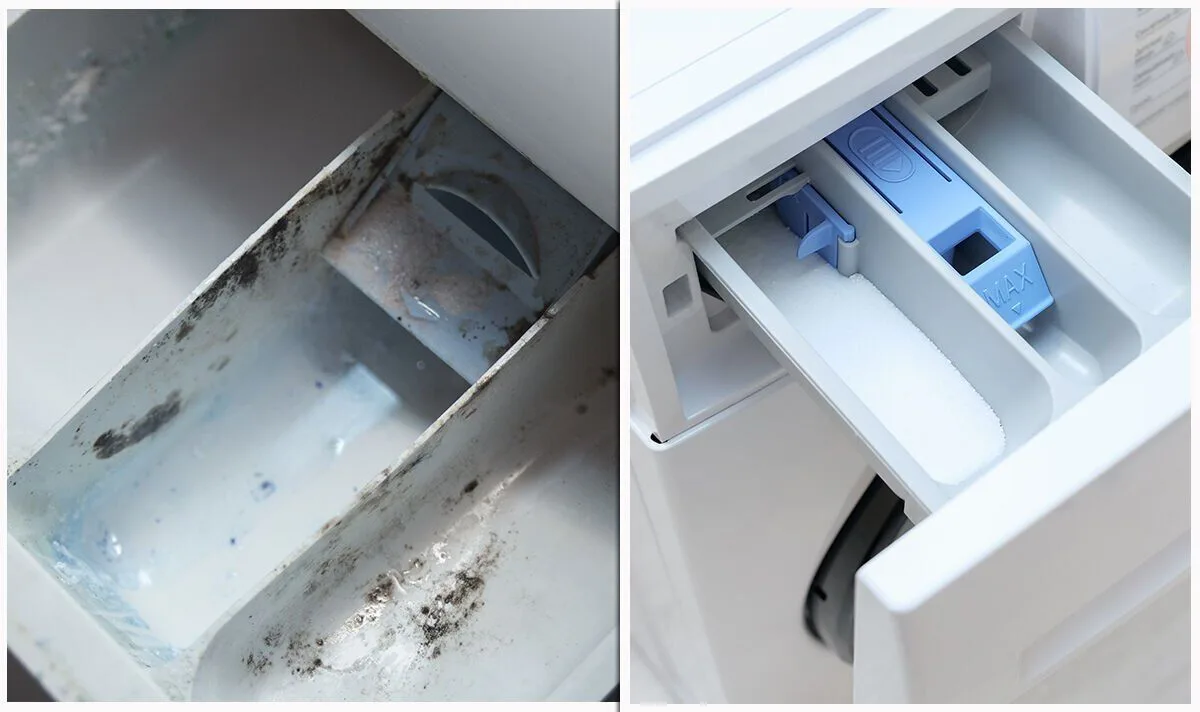
Most DIY recipes tell you to dissolve the grated soap in hot water. But when that solution hits your washing machine, especially in a cold-water cycle, the soap solidifies. It forms sticky, waxy globs that get trapped everywhere the water goes.
First, it clogs the detergent drawer and dispenser. The globs mix with fabric softener and lint, creating a sludgy paste that can literally block the pathway. Then, the residue coats the inside of the drum, the seals, and the intricate hoses and filters.
Over time, this buildup creates the perfect environment for mold and mildew to thrive. You might notice a musty smell coming from your machine, even after a wash. That’s not your clothes; that’s biological growth feeding on the soap scum inside the tub.
There’s also a more expensive consequence: your warranty. Almost all major washing machine manufacturers, including Whirlpool, LG, and Samsung, specify the use of HE detergents. Their manuals often state that using non-HE or homemade soap can void the warranty.
If your machine breaks down and they find soap residue inside, you’re on the hook for the repair costs. We’re talking hundreds of dollars to save a few cents per load.
The slimy residue also affects the machine’s sensors. Modern washers use water level and turbidity sensors to adjust cycles. A thick soap film confuses these sensors, causing the machine to run longer, use more water, or fail to drain properly.
In short, you’re sabotaging a finely tuned appliance with a chemical it was never designed to handle.
The Fabric Problem: What Residue Does to Your Clothes
The same soap scum that coats your washer also coats your clothes. Freshly washed clothes might feel fine at first, but after a few loads, a waxy film starts to build up on the fabric fibers. This film does several bad things.
First, it dulls colors and turns whites gray. The residue actually traps dirt and dust, so instead of getting cleaner, your clothes gradually get dingier. That white t-shirt starts to look tired and worn, no matter how much “cleaner” you use.
Second, it makes towels stiff and rough. The waxy coating prevents water from penetrating the fibers properly. Instead of fluffy and absorbent, your towels become scratchy and repellent.
Third, and most importantly, the residue traps bacteria. Sweat and body oils that weren’t broken down by enzymes get sealed into the fabric by the soap film. When you sweat again, the bacteria reactivates and produces odor.
This is why so many people complain that their “clean” workout clothes or towels smell like damp dog after a few months of using homemade soap.
For anyone with sensitive skin, this is a genuine health concern. The high pH alkalinity of undissolved soap and borax residue can cause contact dermatitis. That means itching, rashes, and eczema flare-ups.
For babies and people with compromised skin barriers, the irritation can be severe. Commercial detergents are heavily testable and often formulated to rinse away completely, leaving very little residue behind. Homemade soap doesn’t.
The Hidden Costs: Why “Cheap” Isn’t Actually Cheaper
On paper, the cost of a homemade batch looks unbeatable. A bar of Fels-Naptha costs about $1.50, a box of washing soda about $4, and a box of borax about $5. You can make a bucket of detergent for under $5 that supposedly lasts for months.
That’s a tempting pitch.
But when you do the math, and look at the actual results, the savings start to disappear. Let’s look at a realistic comparison.
| Factor | Homemade Mix | Budget Commercial Detergent |
|---|---|---|
| Cost per load | ~$0.03 – $0.07 | ~$0.10 – $0.15 |
| Extra rinse cycles | often 2nd rinse is needed | rarely needed |
| Water + energy per extra rinse | roughly 10-15 gallons | $0 |
| Machine repairs over 5 years | likely washer repair ($150-$300) | unlikely |
| Towel/fabric replacement | early replacement due to stiffness | normal longevity |
Your “cheap” solution can cost you more in the long run. Every extra rinse cycle wastes gallons of hot water, which costs you money on both your water and heating bills. The detergent brands you buy at the store are concentrated.

Similar Posts