How Launch Monitors and Swing Data Are Changing the Way Amateurs Practice
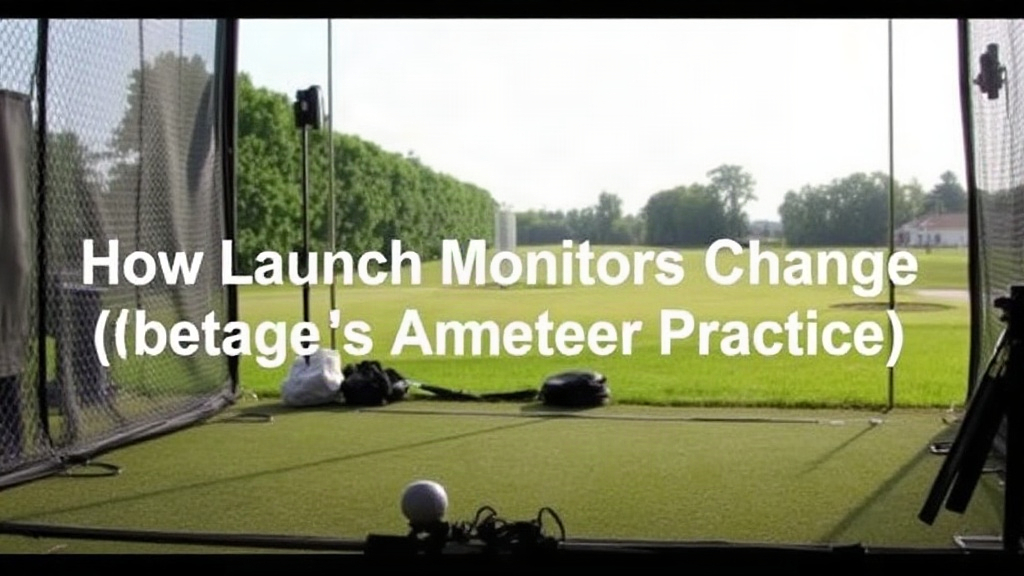
A weekend golfer steps onto the range, hits forty balls, and leaves feeling "a bit better." Then the same miss shows up on Saturday. That gap between effort and improvement is exactly why the golf hub conversation keeps turning to launch monitors and swing data.
Quick answer: Launch monitors turn the driving range into a feedback loop. Instead of guessing where the ball went and why, you see club path, face angle, launch angle, and spin within seconds. The hardware is now cheaper and simpler, but data only helps if you pick a few numbers, practice with a purpose, and resist chasing numbers you don’t need.
This guide explains what launch monitors measure, why that matters for everyday players, how to practice with them, and which habits quietly waste the investment. By the end, you will know what to focus on and what to ignore.
What is the golf hub?
Launch monitors and swing data are the technology side of the golf hub — the broader idea that practice should be measured rather than guessed. A launch monitor is a small device, radar- or camera-based, that sits beside you and measures what happens at impact.
The devices primarily track two sets of information. Club data describes the club itself, such as swing speed, club path, and face angle at impact. Ball data describes the flight, including ball speed, launch angle, spin rate, carry distance, and sometimes lateral curve. Higher-end units add detailed impact location and shaft data, while entry-level models focus on the essentials.
Prices range widely. Some consumer monitors now cost roughly as much as a premium iron set. Studio-grade systems can cost far more. A mid-range model paired with a phone app gives most amateurs plenty of usable feedback.
What changed recently is usability. Setup takes minutes, apps explain the numbers in plain language, and recorded sessions let you compare swings over time. You no longer need a fitting studio to get useful data — a covered range bay and a charged phone often suffice.
The data itself is not the product. The product is a clear picture of why the ball flies the way it does, which makes improvement teachable rather than lucky.
Takeaway: A launch monitor is a practice tool that converts feel into measurable feedback, and it does not require a studio budget.
Why the golf hub matters

Most amateurs practice without knowing what actually happened. They judge a shot by where it landed, but the landing spot hides the cause. A ball that ends up right of target might start there or curve there — very different problems with different fixes.
Launch monitors separate those causes. If the ball starts right and stays right, the face or path is the likely culprit. If it starts straight and curves heavily, spin and face angle are more relevant. That distinction saves hours of trial and error.
The data also exposes mismatches between technique and equipment. A player with high swing speed and spinner-friendly iron technology may lose distance without realizing it. Conversely, slow swing speeds often benefit from lighter weights and higher-launch shafts. Seeing launch and spin numbers makes that visible.
There is a credible reason for the growing adoption. Driving range feedback has historically been low-quality — no target confirmation, no measurement, and no record. Measurement gives motivation a scoreboard, which helps players stay honest about progress.
Technology has limits worth naming. Launch monitors estimate or measure depending on the model, and indoor numbers do not always translate perfectly outdoors. A person’s swing also changes day to day, so one session proves little. Consistent practice matters more than any one reading.
Finally, a launch monitor does not replace instruction. It confirms or challenges what a coach observes. Used alongside professional guidance, the data accelerates understanding. Used alone, it can reinforce a flawed pattern.
Takeaway: Swing data matters because it turns vague practice into specific, correctable information — but it is a feedback tool, not a coach.
Best practices
Regardless of how carefully you set up your bay, a session loses value without a plan, so start with a single question. Pick one goal for the session: tighten dispersion with a wedge, reduce an inside-out path with the driver, or raise launch on a long iron. One goal, one club selection, and twenty focused swings beats two hundred random ones.
Second, use a target and read the numbers together. A launch monitor records what the ball did, but only you know what you intended. Set a target, call your shot, then compare the visualized flight with the data. This habit builds the same decision-making you use on the course.
Third, practice in short blocks and review them. Many players hit more balls as fatigue sets in, and fatigue quietly corrupts the data. Five to eight swings, a short review of the numbers, then a brief reset keeps technique in focus.
Fourth, track a few key metrics rather than all of them. For most amateurs, dispersion pattern, club path, and face angle tell the story. Distance numbers become useful once contact is consistent. Chasing spin rate before you can find the center of the face is backwards.
Fifth, extend the same measured approach to the short game. Putting stroke data — face angle and start line — pairs naturally with a technical skill like reading the green, where small misses cost strokes.
Finally, compare sessions, not shots. One outlier tells you nothing. A trend over several weeks reveals whether the change is sticking.
Takeaway: Practice with one clear goal, a target, short blocks, and a small set of metrics — then judge trends over time.
Common mistakes to avoid
The most common mistake is chasing numbers that belong to someone else. Launch and spin values from a tour professional may be unhelpful if your swing speed is half theirs. Use ranges suited to your speed and skill level, and treat personal improvement as the benchmark.
The second mistake is treating the monitor as an oracle. Some devices measure directly; others calculate from readings and assumptions. Indoor setups can make a slice look straighter than it is because of limited flight. Learn your device’s limitations and confirm key sessions outdoors.
The third mistake is practicing distance without direction. Golf rewards proximity to a target, yet many players hammer the driver and ignore dispersion. A shot that loses fifteen yards of carry but stays on line is usually better. Use the data to favor consistency.
The fourth mistake is data overload. Every session produces dozens of values; you do not need all of them. Players who review everything rarely act on anything. Limit your dashboard, write down two numbers after each session, and ignore the rest.
The fifth mistake is skipping the body. Data shows what the club did, but a stiff back and tired legs distort it. Warm up, keep sessions short, and use a session log so you can spot when numbers drift due to fatigue rather than technique.
The final mistake is expecting instant results. Swing changes take weeks to feel natural and longer to hold under pressure. Use the data to confirm direction, not to chase daily results.
Takeaway: Avoid chasing other players’ numbers, ignoring device limits, overloading on data, and expecting overnight changes.
FAQ
How much should I spend on a launch monitor as an amateur?
Start modest. A consumer model that reports ball speed, launch angle, and carry is enough for most practice goals. Spend more only after you know you will use it weekly and have a space where setup is easy.
Can launch monitors replace lessons with a coach?
No. They measure results, but a coach diagnoses movement and teaches the fix. The best combination is professional guidance plus data you collect between lessons so the work outside the lesson is measurable.
Do I need a special setup at home to practice with one?
Radar-based units often need several feet of ball flight, while camera units need less space but controlled lighting. Check the manufacturer’s space requirements before buying. A covered range bay or a net with a mat is a workable starting point.
How often should I use the data to change my equipment?
Only after your swing is reasonably repeatable. If your dispersion and contact vary widely, gapping and shaft numbers reflect inconsistency, not equipment problems. A fitting makes more sense once a pattern is stable.
Is swing data useful for beginners?
Yes, if kept simple. Beginners benefit most from knowing whether the ball started where they intended. That single insight speeds up learning more than a deep dive into spin numbers.
Conclusion
Launch monitors and swing data change practice by turning guesswork into feedback. Pick one goal per session, use a target, track a small set of metrics, and judge progress over weeks. Keep realistic expectations about device accuracy and your own swing speed, and let a coach handle the technique itself.
Your next step is straightforward: book a session with a borrowed monitor, or use one at a range near you. Hit twenty wedges to a target, note your dispersion and club path, and compare the pattern a week later. The measured picture will tell you where to work first, and that single decision is often worth more than an hour of unfocused range time.

Similar Posts