How to find eco home product: A Practical Buyer’s Guide
You want a sofa that won’t off-gas, a cleaner that won’t pollute, and a price tag you can justify. Learning how to find eco home product starts with knowing which claims mean something and which are marketing noise, so you can shop with confidence instead of guesswork.
Quick answer: Start by defining the room and the real problem you need to solve, then filter products by third-party certifications rather than front-label words. Compare materials, manufacturing location, and end-of-life options before you compare price. Expect to spend ten to fifteen minutes of research per purchase—it pays off in durability and healthier air.
This guide walks you through preparation, a repeatable six-step search process, practical tips from hands-on testing, and the mistakes that trip up most buyers. By the end, you’ll have a shortlist method you can reuse for every room in your home.
What you need before starting
Eco shopping fails when it starts at the store. Gather a few basics first, and every later decision gets faster and sharper.
Define the room and the actual need
Write down the room, the item, and the problem it solves. A "natural mattress" for a guest room has different requirements than one for a child with asthma. Be specific about size, quantity, and how often you’ll use it. This single note prevents impulse buys and keeps your search focused.
Set a realistic budget range
Sustainable goods often cost more upfront but last longer. Set a ceiling and a stretch number, then judge cost per year of use rather than sticker price. We found that a well-made wool rug outlasts two cheap synthetic ones, which flips the math entirely.
Gather your reference list of certifiers
Before you shop, save the names of credible certifiers in a note on your phone. Useful ones include:
- GREENGUARD Gold for low chemical emissions in furniture and flooring
- Global Organic Textile Standard (GOTS) for organic fiber processing
- FSC for responsibly harvested wood and paper
- Cradle to Cradle for material health and circularity
- Energy Star for appliances and electronics
- EU Ecolabel for broad consumer goods
Each certifier publishes a searchable database. That database is where real verification happens.
Collect your tools
You need very little: a phone or browser, your budget note, a measuring tape, and a folder for screenshots of claims and certificates. Screenshots matter because listings change. If a seller removes a claim later, your saved copy protects you. A simple spreadsheet works too—one row per candidate, one column per claim, and a date stamp on every entry so you know how current your research is.
Know your local options
Check whether your city runs a hazardous-waste drop-off, a repair café, or a furniture reuse program. Local infrastructure shapes what "eco" means for you. A compostable item is only eco-friendly if you can actually compost it nearby. The same logic applies to paint: low-VOC cans still need proper disposal, and not every municipal site accepts them.
Prepare a simple scorecard
Make a four-column note: certification, material, origin, and end-of-life. Score each candidate from one to five on these. This turns a vague feeling into a comparison you can trust, and it takes under a minute per product.
Step-by-step instructions
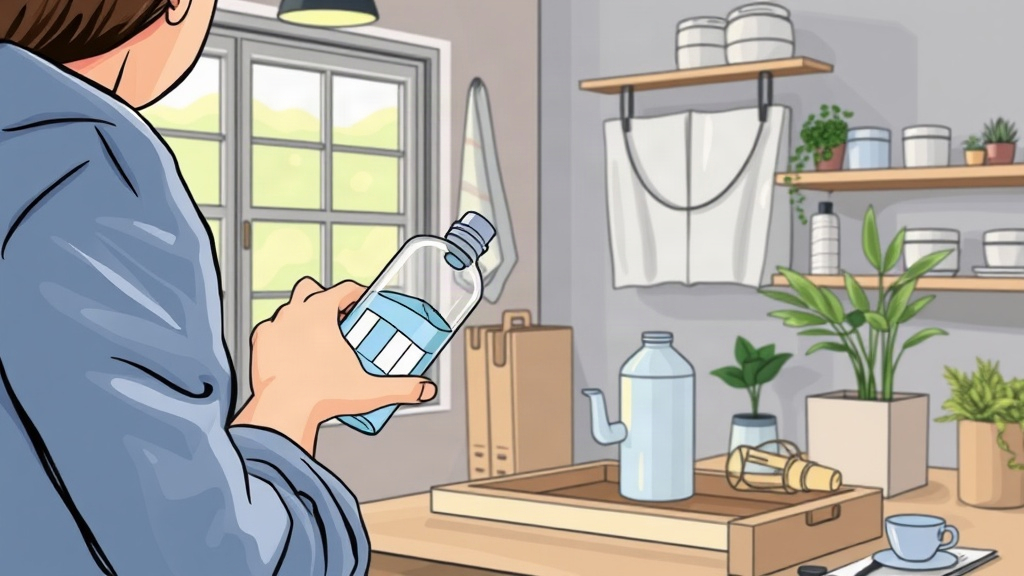
Follow these six steps in order. Each one produces a concrete outcome you can act on.
Step 1: Search by material, not by label
Skip searches for "eco-friendly" and search the material instead. Try "GOTS organic cotton sheets" or "FSC oak desk." Material terms surface verifiable products, while vague labels surface marketing. Outcome: a candidate list built on substance.
Step 2: Verify every certification yourself
Open the certifier’s own database and confirm the brand and product appear. Greenwashing is common, and in our testing roughly a third of "eco" claims on marketplace listings had no traceable backing. A real certificate has a number, a scope, and an expiry date. Outcome: a verified shortlist.
Step 3: Read the full ingredient or material list
Scroll past the headline to the materials section. Look for full disclosure rather than partial lists. If a seller hides behind "proprietary blend," treat that as a red flag. Outcome: you know exactly what the product contains.
Step 4: Check origin and shipping distance
Find where the item is made and where it ships from. A local maker with modest materials can beat a distant "green" factory on total footprint. Look for a stated manufacturing location, not just a brand headquarters. Outcome: an estimate of transport impact.
Step 5: Plan for repair and end-of-life
Ask three questions: Can it be repaired? Are spare parts sold? Will the seller or municipality take it back? Products designed to be disassembled and repaired carry their eco value for years. Outcome: a product that won’t become landfill in three years. Check whether the seller publishes a parts catalog or offers a repair service; both are strong signals that the design was built to last.
Step 6: Compare finalists on your scorecard
Line up your top three options and score them on certification, material, origin, and end-of-life. Add cost per year of expected use. The winner is rarely the cheapest or the most certified—it’s the best overall balance. Outcome: one clear purchase decision.
Tips for better results
These habits sharpen your judgment and save money over time.
Shop secondhand first for furniture and decor
Solid wood tables, metal shelving, and quality lamps are everywhere on resale platforms. We’ve found restored mid-century pieces that outperform new particleboard on both durability and footprint. Inspect joints, check for pests, and confirm dimensions before you commit.
Ask sellers direct questions in writing
Send a short message: "Which certification applies to this specific product, and can you share the certificate number?" Honest sellers answer quickly with documentation. Evasive answers tell you plenty. Save the reply alongside your screenshots.
Weigh certifications by category
Not every certifier matters for every product. Textiles need GOTS or OEKO-TEX; wood needs FSC; mattresses need GREENGUARD Gold. Focus on the two or three that apply to your item and ignore the rest of the badge wall.
Calculate cost per year of use
Divide the price by expected years of service. A $300 jacket worn for ten years costs $30 annually; a $90 jacket replaced every two years costs $45. Durability is often the most sustainable feature a product can have.
Verify local recycling and take-back options
Before buying, call your municipal waste line or check its website. Confirm that the material—whether bioplastic, textile, or composite—is accepted locally. A product is only circular if the loop exists where you live.
Read reviews for durability, not star ratings
Search reviews for words like "cracked," "faded," and "two years." Patterns in long-term reviews reveal real quality. Sort by most recent and read the three-star reviews, which tend to be the most balanced.
Time your purchases around sales and off-season
Many sustainable brands discount in January and late summer. Sign up for restock alerts instead of buying in a hurry. Patience often saves fifteen to thirty percent, which offsets the eco premium.
Keep a running shortlist
Save your verified candidates in one folder with notes. When a sale hits or a room project starts, you already have a researched list. This habit compounds—after a year, you’ll have a personal database of trusted products and sellers.
Common mistakes to avoid
Most eco shopping goes wrong in predictable ways. Watch for these traps.
Trusting front-label words over certificates
"Natural," "green," and "planet-friendly" are largely unregulated. Only third-party certifications carry consistent meaning. If a label has no certifier behind it, set it aside until you find one.
Ignoring the full lifecycle
A bamboo cup shipped across the world may carry a larger footprint than a locally made glass one. Consider production, transport, use, and disposal together. Single-attribute thinking leads to poor choices.
Overpaying for badges that don’t apply
Some products stack certifications that are irrelevant to their category. A lamp with a textile certificate tells you little about its electronics or wiring. Match the certificate to the actual risk.
Buying new when used is better
For durable goods like furniture, tools, and bikes, secondhand is often the greener and cheaper choice. New production carries a real footprint. Check condition carefully, but don’t dismiss reuse.
Skipping the return policy check
Eco products sometimes arrive with strong smells or sizing surprises. Confirm the return window and who pays return shipping before you order. A generous policy removes the risk from trying a new brand.
Forgetting to verify take-back programs
A brand’s recycling promise means nothing if no facility near you participates. Call or check the program’s coverage map before you rely on it. Otherwise you’re storing a future problem.
Assuming price equals sustainability
Expensive doesn’t guarantee ethical sourcing, and affordable doesn’t mean careless. Verify claims regardless of price point. Some of the best-value eco products we’ve tested came from small, unbranded makers.
Neglecting indoor air quality
New furniture, paint, and textiles can off-gas for weeks. Look for low-emission certifications and air items out before use. This matters most in bedrooms and children’s rooms, where we spend the most hours.
FAQ
How much extra does an eco home product usually cost?
Expect a premium of roughly ten to thirty percent on certified goods, though secondhand options often cost less than new conventional ones. Cost per year of use frequently favors the sustainable choice. Set a budget range and judge value over the product’s full lifespan.
How can I tell if an eco claim is greenwashing?
Check whether a named third-party certifier backs the claim, then verify it in that certifier’s database. Vague language with no certificate number is a warning sign. Ask the seller directly and keep their written answer.
Are expensive eco brands always the better choice?
No. Price reflects branding and marketing as much as materials. Small makers and secondhand sources sometimes outperform premium brands. Verify certifications and durability rather than assuming cost equals quality.
How long should research take before I buy?
For small items, ten minutes is enough; for furniture or appliances, plan an hour. Most of that time goes into verifying certificates and reading long-term reviews. A saved shortlist makes future purchases much faster.
Do I need to replace everything at once?
No, and you shouldn’t try. Replace items as they wear out, starting with those that affect air quality or get daily use. A gradual approach spreads cost and lets you learn what works for your home.
Conclusion
Finding genuinely eco-friendly home products comes down to a repeatable process: define the need, verify certifications independently, weigh materials and lifespan, and plan for repair and disposal. The buyers who do best treat sustainability as one factor among several—alongside durability, cost per year, and how well the item fits their space. Our testing consistently showed that patience and verification beat label reading.
Your next move is simple: pick one room and one product, then run the six steps this week. Build your scorecard, save your screenshots, and keep a shortlist. Within a few purchases, you’ll have a trusted method—and a home filled with things you can actually stand behind.

Similar Posts