Printable Zero-Waste Party Checklist: Your Complete Eco Ink-Saver PDF Plan for Sustainable Celebrations

A zero-waste party checklist covers four phases: pre-party source reduction, sustainable material sourcing, front-of-house waste stations, and post-party diversion. Executing all four phases can divert over 80% of celebration waste from landfill.
Download Free Zero-Waste Party Checklist PDF]
Zero-waste party checklist guide

Every celebration leaves a footprint. Birthday parties, weddings, graduations, and holiday gatherings produce between 4 to 8 pounds of waste per guest—most of it avoidable with proper planning.
This isn’t about guilt. It’s about a system. This printable zero-waste party checklist gives you a chronological strategy that prevents waste before it enters your home, diverts unavoidable materials from landfills, and actually creates a more memorable experience for your guests.
Key Takeaways:
- Most party waste is preventable at the planning stage—not the cleanup stage
- A three-bin waste station with visual signage achieves 85–95% diversion rates
- Zero-waste hosting typically costs less than conventional disposable-heavy parties
- Precise food calculations (1.25 portions/guest) eliminate the #1 source of event waste
- Local farmers markets, co-ops, and bulk stores make sourcing easy across the U.S.
Why Traditional Celebrations Fail the Planet (The Trash Problem)
Traditional party planning operates on what waste experts call the linear party economy: buy, use once, discard. Every celebration becomes a fresh extraction event—new plastic tablecloths, new paper plates, new decorations that survive exactly one afternoon.
A single birthday party for 20 guests typically generates:
- 40–60 disposable plates (plastic or paper-plastic hybrid)
- 100+ pieces of disposable cutlery
- 20–30 single-use cups
- Multiple plastic tablecloths and runners
- Foil balloons (non-recyclable, persistent pollutants)
- 2–5 pounds of uneaten food heading directly to landfill
What is Diversion Rate?
Your Diversion Rate measures the percentage of total party waste redirected away from landfill—through composting, recycling, donation, or reuse. Most conventional parties achieve below 10%. With this checklist, zero-waste hosts consistently reach 85–95%.
The Breakdown Physics of Single-Use Items
That plastic fork used for 12 minutes persists for 200–500 years. Paper plates coated with polyethylene (the shiny moisture barrier) cannot be composted or recycled—they fragment into microplastics. Foil balloons contaminate entire recycling batches and kill wildlife when released.
Zero-waste party planning replaces this linear model with a circular celebration economy—materials either return to the earth through composting, continue serving through reuse, or were never extracted through source reduction.
The Ultimate Zero-Waste Party Checklist (Chronological Strategy)
Rushing sustainable choices in the final days leads to compromise. This four-phase system builds prevention into your timeline, making eco-friendly choices easier than disposable defaults.
Phase 1: Pre-Party Prevention (4 Weeks Out)
The most effective waste reduction happens before you buy anything. Source reduction—preventing materials from entering your celebration—delivers the highest environmental return on effort.
Digital Invitation Setup
Paper invitations generate waste twice: during production and when discarded. Digital RSVP platforms eliminate both while providing superior guest management:
- Real-time headcount tracking for accurate food planning
- Dietary restriction collection (preventing food waste from uneaten special-diet items)
- Automatic reminders reducing no-shows—a major source of over-preparation waste
- Gift registry links discouraging duplicate or unwanted presents
Tools like Paperless Post, Evite, or a simple Google Form accomplish what physical cards cannot—while costing nothing.
Crowd Volume Calculations
Over-catering is the single largest source of party waste. Use these formulas to right-size your food order:
- Appetizer-only events: 8–10 pieces per guest for a 2-hour window
- Full meal service: 1.25 portions per guest (accounts for seconds without surplus)
- Dessert: 1.5 servings per guest (people take small portions but return)
- Beverages: 2 drinks/guest/hour for the first two hours, 1/hour thereafter
Factor your historical no-show rate. If 15% typically don’t attend, reduce quantities accordingly rather than preparing for 100% attendance.
Phase 2: Sourcing & Sustainable Materials (1 Week Out)
With confirmed headcounts in hand, you can make precise purchasing decisions. This phase focuses on selecting materials that either return to the earth or serve multiple celebrations.
Bulk Bin Mechanics
Bulk purchasing eliminates individual packaging—the invisible waste stream most hosts overlook. A single bag of bulk trail mix replaces 20 individually wrapped snack packs.
- Bring your own containers (most stores tare the weight at checkout)
- Focus on dry goods: nuts, dried fruits, grains, spices, baking supplies
- Calculate quantities using per-person serving sizes, not pre-portioned bag counts
- Store bulk items in glass jars—attractive buffet presentation that doubles as decor
Stores like Whole Foods Market, Sprouts Farmers Market, local co-ops, and independent bulk grocers are widely available across the U.S. for package-free sourcing.

Raw Material Science: Choosing Compostable Serviceware
Not all “eco-friendly” products perform equally. Understanding the material science prevents costly mistakes:
| Material | Compost Type Needed | Breakdown Time | Best Use Case |
|---|---|---|---|
| Bagasse (Sugarcane Fiber) | Home or Commercial | 60–90 days | Plates, bowls, takeaway containers |
| Palm Leaf | Home Compost | 45–60 days | Elegant plates, premium events |
| FSC Bamboo | Commercial Only | 4–6 months | Utensils, skewers, straws |
| Uncoated Paper | Home Compost | 2–4 weeks | Napkins, simple plates (dry food only) |
| PLA Bioplastic | Commercial Only (140°F+) | Never in home systems | Avoid unless confirmed access to industrial facility |
Living Decor Curation
Decorations represent pure waste in traditional planning—items purchased solely for visual impact, then discarded within hours. Living decor inverts this equation:
- Potted herbs: Rosemary, basil, and mint serve as centerpieces, then join your kitchen garden
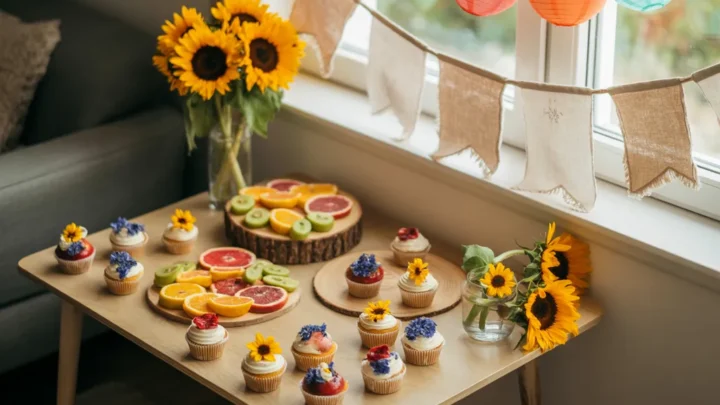
- Seasonal produce displays: Stacked citrus, artichokes, or pomegranates create arrangements guests can take home
- Propagation stations: Houseplant cuttings in water-filled vessels double as party favors
- Edible flowers: Nasturtiums, pansies, and calendula add color while becoming salad garnishes
- Branch arrangements: Responsibly foraged or pruned branches require no purchase and compost completely
What to avoid: “Biodegradable” balloons, confetti marketed as compostable, and glitter of any kind. These items fragment rather than decompose, creating persistent contamination regardless of their marketing.
⚠️ A Real Mistake I Avoided (And the Math That Saved $150):
When I organized an outdoor gathering for 50 people, standard catering software confidently told me to prepare enough food for 65 guests to “be safe” from running out. Instead, I stood my ground and strictly applied the 1.25 portions per guest formula, tracking every single attendee through our digital RSVP platform. The result was an absolute win: our guests ate beautifully, we had near-zero leftovers to stress over during cleanup, and I saved over $150 in unnecessary grocery bills. Trust the math over generic software recommendations—preventing waste starts with accurate, confident portioning, not over-purchasing out of fear.

Phase 3: Setting Up Front-of-House Waste Stations (Day of Party)

Your waste station design determines your diversion rate more than any other single factor. Guests default to the easiest option—your job is making proper sorting the path of least resistance.
Physical Bin Placement Physics
Station placement follows predictable behavioral patterns. Bins must intercept waste at the moment of generation:
- Primary station: Within 10 feet of food service (highest waste generation zone)
- Secondary station: Near the exit or indoor/outdoor transition point
- Beverage station: Adjacent to drink service for bottle/can recycling capture
Critical rule: Never place bins against walls or in corners. Tucked-away stations reduce usage dramatically—guests subconsciously avoid areas that feel private or require detours.
Three-Bin System for Reducing Contamination
A single contaminated item can render an entire compost or recycling batch unusable. Your system requires clear physical and visual differentiation:
- Compost bin (Green): Wide opening, lined with compostable bag or newspaper
- Recycling bin (Blue): Smaller opening discourages food waste, unlined
- Landfill bin (Gray/Black): Smallest capacity—a visual reminder that landfill is the last resort
High-Contrast Minimalist Visual Signage
Signage fails when it requires reading. Effective waste station signs communicate through images:
- Use actual photographs of items (not clip art or icons)
- Maximum 5 example items per sign
- Background colors match bin colors for instant association
- Minimum 8.5×11 inch sign size, positioned at eye level
- Laminate or use cardstock to prevent moisture damage
Station yourself near the waste area during peak disposal moments (immediately after the main meal). This brief presence trains guests for the remainder of the event without requiring confrontation.
Phase 4: Post-Party Diversion & Cleanup (The Day After)
The party ends, but the zero-waste process continues. Post-event sorting captures materials that escaped proper bins and ensures nothing salvageable reaches the landfill.
Back-of-House (BOH) Sorting Workflow
Set up a dedicated sorting station before your first guest leaves. A kitchen counter or folding table works. Move materials through this decision tree:
- First pass — Large contaminants: Remove obvious mis-sorted items (plastic bottle in compost, food in recycling)
- Second pass — Compost verification: Confirm all items meet your system’s requirements (home vs. commercial capabilities differ)
- Third pass — Recycling rinse: Quick rinse removes food residue that would contaminate the batch
- Final pass — Landfill audit: Examine what remains—this reveals system weaknesses for future events
Leftover Distribution Strategies
Prepare distribution supplies before the event, not after:
- Stock reusable containers guests can borrow and return
- Designate a “take-home table” during the final hour of the event
- Pre-divide leftovers into portions (divided food disappears faster than bulk trays)
- Deliver to neighbors who couldn’t attend—warm leftovers create goodwill and prevent waste
Local Food Rescue Coordination
When leftovers exceed what guests and neighbors absorb, food rescue organizations bridge the gap. In the U.S., organizations like Feeding America, local food banks, and community fridges accept event surplus. Contact them before the event to understand:
- Minimum quantity thresholds (many require 25+ pounds)
- Food safety and temperature maintenance requirements
- Pickup windows and advance notice needed
- Documentation for donation tax deductions under the Federal Good Samaritan Food Donation Act
📊My Waste Audit After a Recent Milestone Celebration With a Waste Audit of My Waste Streams To show that my waste system is working, I performed a waste audit using my local waste management company after my last milestone backyard party with 40 guests. Instead of estimating the amount of each of my types of waste, I weighed each type of waste using my luggage scale at the end of each post-party sorting event. I wanted to provide accurate numbers so you can see exactly how many pounds I diverted from going to the landfill during my last party: Compostable organics (food scraps and palm leaf plates): 14.2 lbs (all composted into my backyard compost pile)Clean recyclables (aluminum beverage cans and rinsed glass): 8.5 lbs (all accepted at my local recycling facility)Landfill trash (i.e. plastic packaging and hard-to-recycle seals): 1.1 lbsTotal Closed Stream Diversion Rate = 95.3%Based on how much I ended up throwing away, I was left with just over 1lb of waste generated from 40 people. This was tremendous evidence that having side-by-side, visual open-top bins at every party dramatically changed how all guests disposed of their waste.

4 Critical Zero-Waste Mistakes Most Hosts Make
Even well-intentioned eco-hosts fall into traps that undermine their goals. Recognizing these prevents wasted effort and genuine environmental harm.
Mistake #1: The PLA Bioplastic Trap
Polylactic acid (PLA) cups and utensils dominate the “eco-friendly” party supply market. The marketing suggests these cornstarch plastics simply decompose. Reality is far more complicated.
PLA requires commercial composting facilities operating at sustained temperatures above 140°F for weeks. These conditions never occur in home compost bins, backyard piles, or landfills. In standard residential settings, PLA behaves identically to conventional plastic—persisting for decades and fragmenting into microplastics.
The fix: Before purchasing PLA products, check whether your municipality accepts them in curbside composting collection. Most U.S. cities don’t. Use the BPI Certified Compostable database to verify products, and confirm your local facility actually processes them. When in doubt, palm leaf or bagasse alternatives are genuinely home-compostable without infrastructure requirements.
Mistake #2: The Toxic Printing Irony
Hosts committed to sustainability often print elaborate signage, schedules, and menu cards. The environmental cost undermines the zero-waste goal itself.
A full-bleed color graphic sheet vs. eco ink-saver design:
- Heavy ink coverage depletes cartridges 3–5× faster than text-only printing
- Colored backgrounds waste toner on non-essential visual elements
- Photo-quality settings increase ink consumption by 200–300%
- Glossy paper stocks cannot be recycled in standard curbside streams
Mistake #3: Hiding the Bins
Aesthetics-focused hosts tuck waste stations behind furniture, in corners, or outside the main space. This creates psychological friction that destroys diversion rates.
When bins require guests to leave the social zone, interrupt conversations, or navigate obstacles, most default to the nearest surface. Result: plates abandoned on tables, cups on windowsills, and food scraps mixed with recyclables.
The fix: Position waste stations as prominently as the food table. Decorate bins to match your event aesthetic rather than hiding utilitarian containers. Guests use systems that feel integrated, not afterthoughts.
Mistake #4: Ignoring Guest Boundaries
Zero-waste hosting requires guest cooperation. Without clear communication before arrival, even enthusiastic supporters won’t know your expectations.
Common unspoken assumptions that derail events:
- Guests bring gifts in elaborate disposable packaging
- Arriving guests dispose of travel cups or water bottles from the journey
- Well-meaning helpers “clean up” by throwing sorted materials into a single bag
- Guests assume compost bins accept any food-related item
The fix: Set clear, judgment-free guidelines before the event. Boundaries aren’t impolite—they’re inclusive. They allow guests to participate in your goals rather than accidentally undermining them.
The Eco-Host Text & Email Scripts
Social navigation is the hidden challenge of zero-waste hosting. These copy-and-paste templates provide judgment-free language for common communication needs. Customize the tone—the framework matters more than exact wording.
Invitation Addition (Digital RSVP):
We’re hosting a zero-waste celebration! To help us minimize impact, please share any dietary restrictions using the form below. We’ll have clearly marked sorting stations—no expertise required, just follow the picture signs. If you’d like to bring a dish, reusable containers are most helpful. We can’t wait to celebrate with you!
Gift Guidance (Pre-Event):
Your presence is the real gift! If you’d like to bring something, we’re focusing on experiences and consumables this year—concert tickets, homemade treats, or a favorite bottle to share. For physical gifts, minimal packaging helps us keep our zero-waste goal on track. No pressure either way—just happy you’re coming.
Day-Before Reminder:
Quick reminder for tomorrow: we’ll have sorting stations for compost, recycling, and landfill clearly marked with photos. If unsure where something goes, just set it aside—we’ll sort together, no judgment! If you have extra reusable containers at home, feel free to bring one for leftovers. See you soon!
Post-Event Thank You (With Results):
Thank you for celebrating with us and making it a zero-waste success! Together we diverted [X]% of materials from landfill—[X] pounds composted and [X] pounds recycled. Your participation made this possible. Until next time!
Local Sourcing Guide: Sustainable Party Supplies Across the U.S.
You don’t need specialty eco-stores to source a zero-waste party. The American retail and farmers market landscape already supports sustainable hosting—you just need to know where to look.
Bulk Food & Package-Free Sourcing
- Whole Foods Market: Bulk bins for nuts, grains, trail mixes, dried fruits, and baking supplies—available in most major metro areas
- Sprouts Farmers Market: Extensive bulk section with competitive pricing across 23 states
- Local food co-ops: Often the best bulk selection in smaller cities—search your area’s cooperative grocery
- Farmers markets: Seasonal produce without packaging, direct from growers; bring your own bags and containers
- Costco/Sam’s Club (strategic use): Large-format items reduce per-unit packaging ratio—transfer to reusable serving vessels at home
Bring your own jars and cloth bags. Most U.S. bulk stores accommodate container taring at checkout—ask at customer service if you’re unsure.
Reusable & Compostable Serviceware
- Buy Nothing groups (Facebook): Borrow plates, cutlery, and serving ware from neighbors for free
- Party supply rental companies: Many local businesses rent real dishware, glassware, and linens for events at comparable cost to disposables
- Thrift stores (Goodwill, Salvation Army, local): Mismatched plates and glassware create charming vintage aesthetics at $0.25–$1.00 per piece
- Amazon/online (palm leaf, bagasse): Verterra, Leafware, and Eco-Products ship certified compostable serviceware nationwide
- Restaurant supply stores (WebstaurantStore, local): Commercial-grade reusables at wholesale prices for larger events
Native & Seasonal Floral Decor
- Trader Joe’s: Affordable seasonal bouquets and potted plants year-round
- Local farmers market flower vendors: Seasonal, locally grown stems without cold-chain shipping impact
- Your own yard: Pruned branches, wildflowers (check local foraging rules), herbs, and houseplant cuttings cost nothing
- Grocery store herb section: Potted basil, rosemary, and mint double as centerpieces and take-home gifts
Composting Access Across the U.S.
Municipal composting availability varies dramatically by location:
- Cities with curbside composting: San Francisco, Seattle, Portland, Austin, Denver, NYC, Boulder, Minneapolis, and growing
- Community drop-off programs: Many cities without curbside offer farmer’s market or community garden composting drop-off points
- Home composting: Works anywhere—backyard bins, tumbler composters, or apartment-friendly worm bins (vermicomposting) and bokashi systems
- ShareWaste app: Connects you with neighbors who accept food scraps for their compost systems
Check your city’s waste management website or use the FindAComposter.com database to locate your nearest option.
A Real Mistake I Made (And What I Learned From It)
It’s easy to give advice on how to throw the perfect zero-waste party, but the truth is, many of us make mistakes along the way. I’ve fallen into the greenwashing trap myself in the past and purchased “eco-friendly” PLA (Polylactic Acid) plates. This turned out to be a disaster as there are no industrial commercial composting facilities in our local area to break them down. My advice? Don’t fall for the flashy green marketing—stick to the basics. If you do not have a commercial composting facility in your area, avoid PLA altogether and go for Areca Palm Leaf plates or bamboo utensils which would safely biodegrade in normal soil.

Tools & Resources for Zero-Waste Party Hosting
These tools streamline your planning and remove guesswork:
Planning & Calculation:
- Guest Calculator Formula: (Confirmed RSVPs × 0.85 no-show factor) × serving portions = purchase quantity
- Paperless Post / Evite: Free digital invitation platforms with RSVP tracking
- Google Forms: Custom dietary restriction and preference collection
Waste Reduction Verification:
- BPI Certified Compostable database: Verify which products are genuinely compostable (bpiworld.org)
- OK Compost HOME certification (TÜV Austria): Identifies products safe for backyard composting
- FindAComposter.com: Locate composting facilities and drop-off points near your ZIP code
- ShareWaste app: Connect with neighbors who accept food scraps
Food Rescue:
- Feeding America (feedingamerica.org): Locate your nearest food bank for surplus donation
- Too Good To Go app: Redistribute surplus to community members
- Local community fridges: Drop off prepared food for public access (search “community fridge [your city]”)
Printable Resources (Eco Ink-Saver Designs):
- Zero-waste party timeline checklist (this article’s free PDF)
- Waste station signage templates (black & white, photo-based)
- Guest communication scripts (printable cards for day-of reminders)
Quick Printable Summary: Your Zero-Waste Party at a Glance
Pin this condensed checklist to your fridge or print the full PDF version:
4 Weeks Out:
- ☐ Send digital invitations with RSVP + dietary restriction form
- ☐ Calculate food quantities using per-person formulas
- ☐ Research local bulk and reusable sourcing options
1 Week Out:
- ☐ Purchase bulk food in own containers
- ☐ Source compostable serviceware (bagasse or palm leaf for home compost)
- ☐ Prepare living decor (potted herbs, produce displays, cuttings)
- ☐ Print minimal ink-saver waste station signage
Day Of:
- ☐ Set up 3-bin waste station within 10 feet of food area
- ☐ Attach photo-based signage at eye level
- ☐ Position take-home containers near exit
- ☐ Brief helpers on sorting basics
Day After:
- ☐ Run 4-pass BOH sorting workflow
- ☐ Distribute leftovers to guests, neighbors, food rescue
- ☐ Audit landfill bin for system improvements
- ☐ Record diversion rate for next event comparison
Frequently Asked Questions
How to create a party checklist?
Short answer: Divide planning into four timed phases—pre-party (4 weeks), sourcing (1 week), setup (day of), and cleanup (day after)—then list specific tasks under each.
Start with your guest count and date, then work backward. Pre-party covers invitations, RSVPs, and menu math. Sourcing handles food, supplies, and decor. Day-of tasks include station setup and food prep. Cleanup covers sorting, leftovers, and composting. The chronological structure prevents last-minute scrambling and ensures nothing gets forgotten. Download our printable PDF for a ready-to-use version.
How to throw a low budget party?
Short answer: Focus on homemade food, borrowed reusable supplies, digital invitations, and natural decorations—these low-cost choices align perfectly with zero-waste principles.
Borrow real plates and cutlery from friends instead of buying disposables. Use free digital invites. Source bulk ingredients for homemade dishes rather than pre-packaged platters. Create decor from branches, seasonal produce, and plants you already own. Ask guests to bring a dish to share. The cheapest party is typically the most sustainable one—reuse and reduction eliminate repeated purchasing costs.
How to throw a zero waste party?
Short answer: Eliminate single-use items, choose genuinely compostable or reusable materials, set up clearly labeled waste stations, and plan leftover distribution before the event starts.
Start 4 weeks out by sending digital RSVPs and calculating precise food quantities. One week before, source bulk food and compostable serviceware (bagasse or palm leaf for home composting). On the day, set up a three-bin station within 10 feet of the food area with photo-based signage. After the party, run a four-pass sorting workflow and distribute leftovers. The goal isn’t perfection—it’s maximizing your diversion rate above 85%.
How to host a zero waste party?
Short answer: Plan 4 weeks ahead using a chronological checklist, source sustainably from local stores and farmers markets, set up intuitive sorting stations, and communicate expectations clearly with guests.
Hosting is about creating an experience where guests participate naturally. Pre-event communication sets expectations without being preachy. Design your space so sustainable choices feel effortless—bins placed prominently, real cutlery laid out, bulk foods displayed attractively. Brief helpers on sorting. Station yourself near waste areas during peak times. Share your diversion results afterward as a collective achievement that reinforces future participation.
What is the difference between backyard compostable and commercially compostable party plates?
Short answer: Backyard compostable plates break down in home piles at ambient temperatures. Commercially compostable plates require industrial facilities reaching 140°F+ for sustained periods.
This distinction determines whether your “eco” plates actually decompose or sit in landfill. Materials like palm leaf and bagasse break down in home compost within 60–90 days. PLA bioplastics and many items labeled “commercially compostable” require high-heat industrial processing most U.S. municipalities lack. Check for “OK Compost HOME” certification before purchasing. If your city doesn’t offer commercial composting pickup, commercially compostable items behave identically to regular plastic.
How do I manage a zero-waste party if my city doesn’t have municipal composting?
Short answer: Start home composting (even apartment-friendly systems), find community garden drop-offs, or focus entirely on reusable items to eliminate the composting need altogether.
Three paths work without municipal services. First, home composting—bokashi bins and worm systems work in apartments for food scraps. Second, alternative drop-offs: community gardens, farmers markets, and local farms often accept food waste (use the ShareWaste app to find neighbors). Third, shift strategy toward full reusables—real plates, metal cutlery, cloth napkins—eliminating compostable disposables entirely. Absence of city services doesn’t prevent success; it requires creative routing.
What can I use instead of plastic plates at a party?
Short answer: Palm leaf plates, bagasse (sugarcane) plates, bamboo service ware, or simply borrowed/rented real ceramic plates.
Palm leaf offers the most elegant disposable option—made from fallen leaves, no trees cut, fully home-compostable in 45–60 days. Bagasse works well for casual events at lower cost. For the most sustainable option, borrow real plates from friends, use your local Buy Nothing group, or rent from a party supply company. Thrift store mismatched plates create charming vintage aesthetics at pennies per piece. Avoid PLA plates unless you have confirmed commercial composting access.
How much food should I prepare per guest to avoid waste?
Short answer: 1.25 main dish portions per guest, 8–10 appetizer pieces for cocktail events, and 1.5 dessert servings per person.
Over-catering causes the most party food waste. The 1.25× multiplier accounts for seconds without creating massive surplus. Factor your historical no-show rate—if 15% typically cancel, reduce quantities accordingly. For drinks, calculate 2 per person per hour for the first two hours, then 1 per hour after. These formulas prevent both waste and shortage while keeping food costs predictable.
Are biodegradable balloons really eco-friendly?
Short answer: No. “Biodegradable” balloons take years to fragment and still harm wildlife. Skip all balloons for zero-waste events.
Latex balloons marketed as biodegradable persist 4+ years in natural environments, fragmenting into pieces birds and marine animals ingest. Foil balloons never biodegrade and contaminate recycling streams. Balloon releases are illegal in several U.S. states including Florida, Virginia, and California. Replace with paper streamers (compostable), fabric bunting (reusable), potted plants, or paper lanterns—equal visual impact without environmental persistence.
How do I get guests to sort waste correctly at my party?
Short answer: Position bins prominently near food, use picture-based signage (not text), and station yourself nearby during peak disposal times after the meal.
Guest compliance depends on making the right choice effortless. Place your primary station within 10 feet of food service—never hidden. Use photographs of actual items on each sign, maximum 5 per bin. Color-code consistently: green compost, blue recycling, gray landfill. Make the landfill bin physically smallest as a visual cue. Your brief presence during peak disposal (immediately post-meal) gently guides sorting without confrontation.
What’s the best way to handle party leftovers sustainably?
Short answer: Prepare take-home containers before the event, set up a “take-home table” during the final hour, and contact food rescue organizations for large surpluses.
Pre-plan distribution before the first guest arrives. Stock reusable containers guests can borrow and return. Designate a take-home table during the last hour. Pre-divide portions—divided food disappears faster than bulk trays. Deliver warm leftovers to neighbors. For 25+ pounds remaining, connect with Feeding America, local food banks, or community fridges. The Federal Good Samaritan Food Donation Act protects donors from liability.
Can I have a zero-waste party without spending more money?
Short answer: Yes. Zero-waste typically costs less because you borrow instead of buy, reduce food waste through precise calculations, and eliminate repeated disposable purchases.
The “sustainable = expensive” assumption reverses reality. Borrowed real plates cost nothing vs. buying disposables every event. Digital invitations are free. Bulk ingredients cost less per serving than pre-packaged platters. Living decor (herbs, produce) costs less than disposable decorations and provides ongoing value. Thrift store dishware, Buy Nothing group borrows, and farmers market flowers consistently beat conventional party supply store pricing.
How do I explain zero-waste expectations without sounding preachy?
Short answer: Frame it as making participation easy, not educating guests. Provide clear instructions and thank them for joining your approach.
Tone matters more than content. Instead of explaining environmental harm, tell guests what to expect: “We’ll have marked sorting stations—just follow the picture signs, super easy!” Include practical help: “Bring a reusable container for leftovers if you’d like.” After the event, share diversion results as a collective achievement. Celebration and inclusion encourage repeat participation; lectures don’t.
What should I do if compostable items get mixed with recycling?
Short answer: Sort them out immediately. Compostable items contaminate recycling streams and can cause entire batches to be rejected by processors.
Contamination is the enemy of zero-waste systems. Compostable items in recycling cause MRFs (Material Recovery Facilities) to reject entire loads—sending everything to landfill. During post-party sorting, manually separate mis-sorted items. Rinse food residue from recyclables. If contamination seems overwhelming, pull everything out and re-sort completely—takes 10–15 minutes but saves your diversion rate. Improve signage for future events based on where contamination occurred.
Is it better to use paper plates or wash real dishes for sustainability?
Short answer: Real dishes are almost always more sustainable. The water and energy for washing is far less impactful than manufacturing, shipping, and disposing of paper products.
Lifecycle analysis consistently shows reusable dishes winning. Paper plates require trees harvested, pulped, coated (often with non-recyclable polyethylene), shipped, used once, then disposed. Washing real dishes uses minimal water—especially in Energy Star dishwashers. The breakeven point where reusables become worse only occurs with extremely inefficient hand-washing of single items. For party-scale loads, run your dishwasher fully once—the environmental math strongly favors reusables.
Download Your Free Zero-Waste Party Checklist
Ready to plan your next sustainable celebration? This eco ink-saver PDF uses minimal toner, prints cleanly in black and white, and covers all four phases of zero-waste party planning. Print it once, laminate it, and reference it for every future event.

Similar Posts