How to Plan a Plastic-Free Party Complete Planning Guide

A plastic-free party means swapping every disposable for something that actually breaks down in your backyard — not in an industrial facility you’ll never visit. Use FSC-certified paper fans in place of balloons, unlined sugarcane bagasse cups instead of plastic-lined “paper” ones, and kraft seed packets as favors instead of plastic trinket bags. The one rule that prevents greenwashing: if the packaging doesn’t show a TUV Austria OK Compost HOME or ASTM D6400 seal, it won’t compost at home no matter what the front label claims.
Why This Guide Exists
Most online “eco party” guides do a great job of explaining why plastic is bad. Then they leave you stranded when it comes to actually pulling off a party that looks good, stays on budget, and doesn’t fall apart mid-event.
This guide is different. It’s built around the three things those articles ignore: material science that exposes greenwashing, high-design aesthetics that prove natural materials look better than plastic, and real logistics, including what to do when you’re hosting 30 kids and the dishwasher isn’t an option.
Whether you’re planning a toddler’s birthday, a school classroom celebration, or an adult dinner party, everything below is structured so you can scan it, grab what you need, and execute with confidence. No guilt trips. No vague advice. Just the practical blueprint.
How Do You Throw a Plastic-Free Party?
To host a 100% plastic-free party, replace conventional single-use items with rapidly renewable, backyard-compostable raw materials. Swap plastic balloons for FSC-certified paper accordion fans, switch polyethylene-lined cups for 100% unlined sugarcane bagasse, and trade plastic favors for kraft paper seed packets.
Ensure all disposables carry certified Home Compostable (TUV Austria / OK Compost HOME) or ASTM D6400 markings to avoid industrial greenwashing. If you’re new to zero-waste event planning, start with our complete zero-waste party planning guide for the full framework.
The Greenwashing Trap: Why “Biodegradable” Party Supplies Fail
Most products labeled “biodegradable” or “compostable” at your local party store will sit in a landfill for decades. The label sounds reassuring, but it misleads people genuinely trying to make better choices.
The Hidden Truth About PLA Bioplastics and ASTM D6400
PLA (polylactic acid) is the material behind most “plant-based” cups and cutlery sold online. It’s made from corn starch, which sounds ideal. The problem? PLA requires sustained temperatures above 58°C (136°F) to break down. That only happens inside industrial composting facilities, not in your backyard heap, and never in a landfill.
When you toss a “compostable” PLA cup into your garden bin, it behaves almost identically to conventional plastic. It just sits there for years.
The ASTM D6400 certification (common in North America) confirms a product will decompose in an industrial facility. That’s useful if your municipality collects commercial compost. For home composters, it means nothing practical.
Regional context: The EU Single-Use Plastics Directive (2021) and UK Environment Act 2021 have banned several single-use plastic items outright, but “biodegradable” alternatives still slip through without proper home-compost certification. In the US, California’s SB 54 is pushing extended producer responsibility, but enforcement varies by state. Regardless of where you live, the certification check remains your only reliable protection.
True Certifications to Look For: TUV Austria, OK Compost, and FSC
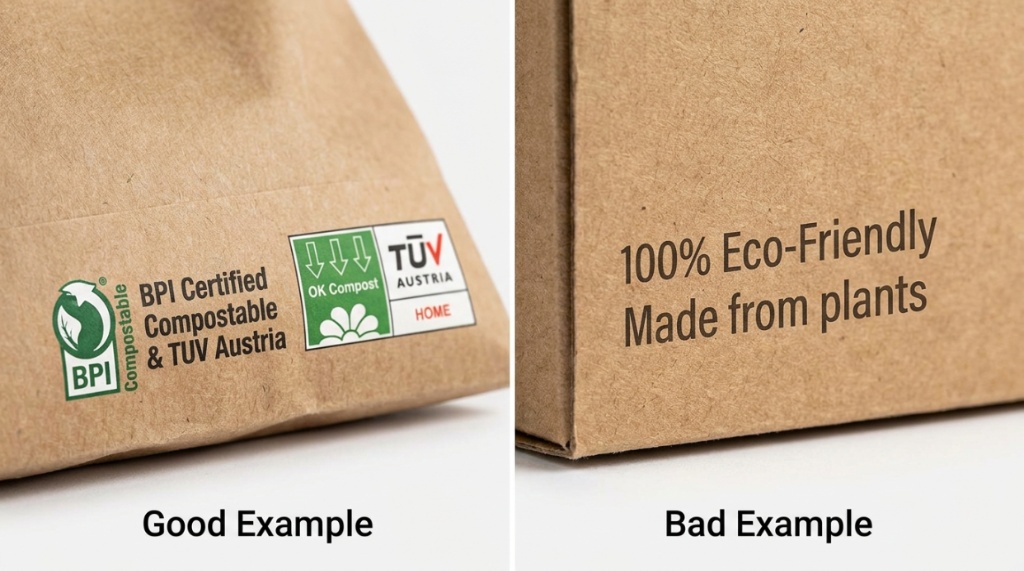
When shopping for party supplies that genuinely decompose at home, look for these marks on the packaging:
- TUV Austria OK Compost HOME—The gold standard. Certifies the product decomposes in ambient backyard conditions. Most common on products sold in Europe, the UK, and Australia.
- OK Compost INDUSTRIAL—Only useful if your local council collects commercial food waste for industrial processing.
- ASTM D6400—The dominant standard in North America. Confirms industrial compostability only—not home compost.
- FSC (Forest Stewardship Council)—Confirms paper and wood products come from responsibly managed forests. Look for this on paper plates, wooden cutlery, and cardboard decorations.
Where to find them: Flip the product packaging over. These logos are printed small, usually near the barcode or on the base. If a brand says “eco” prominently on the front but shows no certification logo on the back, that’s a red flag worth walking away from.
The Direct Swap Table: Conventional Plastic vs. Sustainable Materials
This is the reference table you’ll want bookmarked before your next shopping trip. Every alternative listed below has been selected for real-world durability—not just theoretical eco-credentials.
| Conventional Plastic Item | Direct Sustainable Alternative | True Disposal Pathway | Real-World Performance |
|---|---|---|---|
| Plastic Balloon Arch | FSC Paper Accordion Fans & Honeycombs | 100% Curbside Recycling | Folds flat; reusable 5+ times |
| Polyethylene-Lined Paper Cups | 100% Unlined Sugarcane Bagasse Cups | Home Compost Bin | Holds hot/cold liquids up to 4 hours without sagging |
| Plastic Tablecloths | Unlined Kraft Paper Rolls / Cotton Rentals | Compostable / Washable | Kids can color directly on tables with crayons |
| Plastic Toys / Favor Trinkets | Mini Coloring Books & Seed Packets | 100% Biodegradable | Zero waste footprint; high educational value |
| Synthetic Glitter / Confetti | Dried Flower Petals & Punched Leaf Dots | Natural Soil Degradation | Degrades within 7 days outdoors; zero toxic residue |
Party Themes That Naturally Align with Plastic-Free
One of the biggest missed opportunities in plastic-free planning is theme selection. Certain popular party aesthetics are inherently plastic-free—you just need to lean into them intentionally.
- Boho/Bohemian—Dried pampas grass, macramé, linen table drapes, terracotta pots. Every element is reusable or compostable by nature.
- Rustic Garden—Potted herbs as centerpieces, wooden crates, burlap runners, wildflower arrangements. Zero plastic required.
- Minimalist / Scandinavian—Clean lines, white linen, birchwood accents, single-stem flowers in glass bottles. Elegant and waste-free.
- Woodland/Nature Explorer—Perfect for kids. Pinecones, moss, wooden animal figures, and kraft paper maps. The forest provides the decorations.
The insight here: natural textures like pressed palm leaf, linen, terracotta, and raw wood create a far more premium, shareable aesthetic than cheap glossy plastic ever could. You’re not sacrificing style—you’re upgrading it.
Zero-Plastic Tablescapes: Sustainable Plates, Cups, and Cutlery
Now that you have the full swap overview, let’s dig into the performance details that matter when choosing between materials.
Sugarcane Bagasse vs. Palm Leaf (Areca) Plates
Both are excellent options, but they handle different situations better:
Sugarcane bagasse plates:
- Lighter weight, smoother surface
- Handle cold foods, salads, and cake perfectly
- Can soften if holding heavy, oily food for more than 90 minutes
- Usually 30-50% cheaper per plate in bulk
Palm leaf (Areca) plates:
- Sturdier, with a natural wood-grain texture
- Handle hot, oily, and saucy foods without buckling
- Each plate looks unique (a design feature)
- More expensive per unit, but double as visual centerpieces
Practical verdict: Use bagasse for dessert tables and lighter fare. Use palm leaves for mains, BBQ plates, or anything with curry, gravy, or hot oils. Mixing both at one event adds appealing textural variety.
Splinter-Free Birchwood Cutlery and Bamboo Fiber Straws
The number one complaint about wooden cutlery is mouthfeel—that dry, fuzzy texture on cheap wooden forks. Here’s how to avoid it entirely:
- Choose birchwood over generic “wooden” cutlery. Birchwood is naturally smoother and denser. No splintering, no fuzzy coating on your tongue.
- Look for “sanded” or “polished” in the product description. This confirms proper surface finishing.
- Avoid poplar. It’s the cheapest wood used for disposable cutlery and the main source of mouthfeel complaints.
For straws, skip paper entirely for hot or acidic drinks. Paper straws disintegrate in lemonade or hot chocolate within 15-20 minutes. Bamboo fiber straws or wheat straws hold up for hours and feel natural in use.
Glassware Solutions and the Reusable Party Kit Network
Before purchasing any disposables, ask: do I actually need them?
A growing network of Party Kit rental services exists specifically for events. You pay a flat fee, receive a box of real plates, glasses, and metal cutlery, use them, rinse (not scrub), and return the box. The carbon footprint is dramatically lower than buying new—even new eco-disposables.
Where to find kit networks:
- UK: Search “party kit network” + your city. Many operate through local zero-waste shops or community groups. Also try “Library of Things” services.
- US: Check platforms like Dishistry, local buy-nothing groups, or search “[your city] reusable party kit rental.”
- Australia: Party Kit Network Australia offers a searchable directory by postcode.
For kids’ parties, renting eliminates the stress of hunting for certified compostable alternatives. Children don’t notice whether plates are palm leaf or ceramic—they notice the cake.
High-Impact Decorations Without Single-Use Synthetics
Decorations are where plastic-free planning gets genuinely creative. Natural materials photograph beautifully—far better than shiny plastic banners that reflect flash and look cheap in images.
Ditching the Balloon Arch: Marine Debris and Helium Depletion
Balloons are the second most common item found in ocean debris after plastic bags. Even “natural latex” balloons take months to years to decompose and pose choking hazards to marine wildlife throughout that period. Helium is also a finite, non-renewable resource critical for medical MRI machines—party balloons represent a genuinely wasteful use.
Alternatives that match the visual impact:
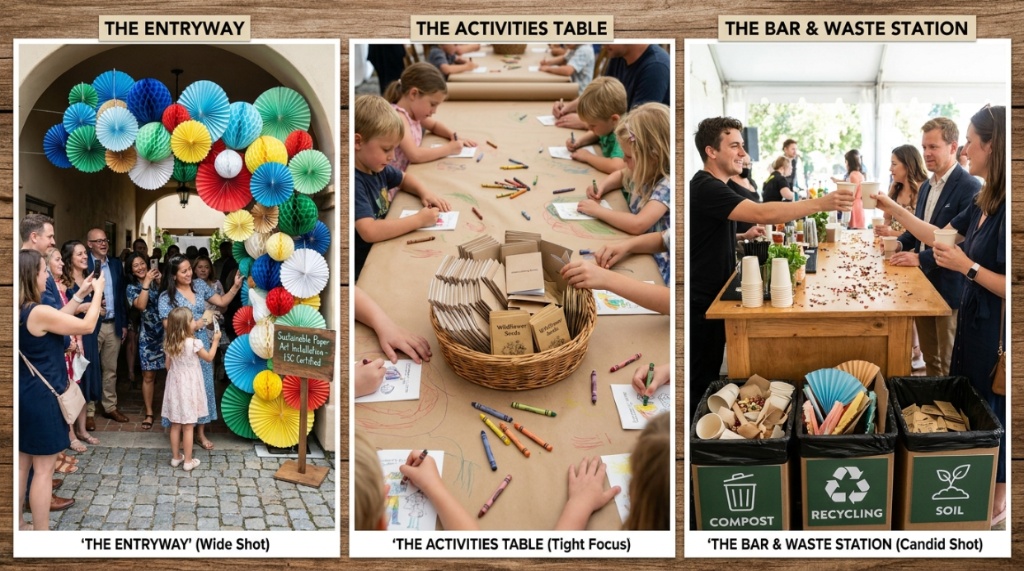
- FSC-certified paper honeycomb balls and accordion fans (fold flat, reusable 5+ times)
- Giant soap bubble stations (kids consistently prefer these)
- Tissue paper pom-poms in layered colour palettes
- Dried flower garlands strung on jute twine
Reusable Organic Cotton Bunting and FSC-Certified Honeycomb Garlands
The key mindset shift: invest once in reusable decorations rather than purchasing disposable sets repeatedly.
A set of organic cotton bunting triangles costs roughly the same as 3-4 packs of single-use plastic banners. It lasts for years, photographs better, and stores completely flat in a drawer.
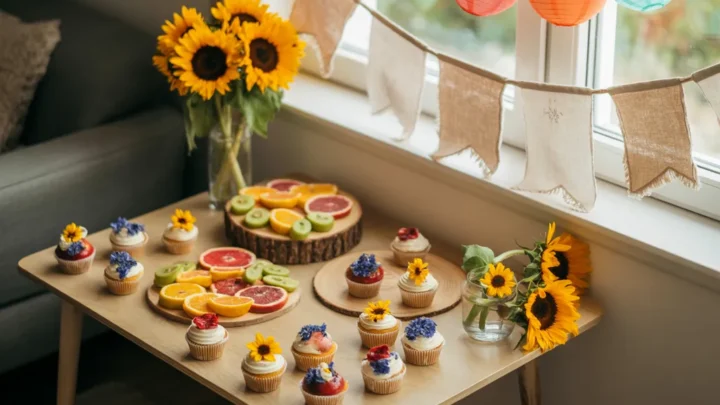
Photo backdrop styling tip: Layer three elements at different heights — bunting at the top, paper honeycombs at mid-level, and a kraft paper table runner with botanical elements at the base. This creates depth that looks professional and highly shareable.
Bringing the Outside In: Botanical Centerpieces and Leaf Confetti
Instead of buying decorations, gather them:
- Ivy strands draped along table edges
- Pinecones brushed with non-toxic milk paint
- A hole punch + fallen leaves = natural confetti that degrades within a week
- Potted herbs as centerpieces (guests take them home as living favors)
This costs almost nothing, creates zero waste, and produces a tablescape that looks editorially styled.
Digital Invitations: The First Zero-Waste Win
Your plastic-free party starts before the event—with how you invite people. Paper invitations generate waste before a single plate is set.
Best free and low-cost options:
- Paperless Post—Beautiful templates, RSVP tracking built in.
- Canva—Design custom invitations, send as PDF or image via messaging apps.
- WhatsApp/Messenger group—Perfectly functional for informal gatherings.
- Evite—Free tier available with RSVP management.
Include your plastic-free guidelines directly in the invite. A simple line like “We’re celebrating plastic-free—kraft paper or fabric wrapping is perfect for gifts!” sets expectations early and prevents plastic from arriving at your door.
The Eco-Parent Dilemma: School-Approved, Plastic-Free Kid Parties
This section is for the parent who just received a school email saying “no single-use plastics at birthday celebrations” and is now quietly panicking. You’re not alone—this is one of the most searched pain points in the plastic-free space.
Sourcing Non-Plastic Goody Bag Fillers in Bulk
Cheap plastic trinkets break within hours. Kids don’t miss them. Here’s what works as party bag fillers, bought in bulk at reasonable cost:
- Mini coloring books (kraft paper cover, staple-bound)—packs of 24 cost roughly the same as plastic toy bags
- Crayon rocks (soy-based wax, pebble-shaped)—no plastic packaging, double as a party activity
- Seed packets in kraft envelopes—sunflowers or cherry tomatoes give kids something to grow
- Beeswax crayons wrapped in paper bands
- Wooden spinning tops or simple puzzles
The bag itself: Unlined kraft paper lolly bags tied with natural jute twine. Charming, cost pennies each, compost completely.
Classroom Birthday Treats with Zero Plastic Packaging
Most school policies require individually packaged treats for hygiene—but they don’t specify plastic packaging. The workaround:
- Order mini cupcakes or cookies from a local bakery. Ask them to place each in an individual unlined kraft paper bag (most bakeries do this at no extra charge).
- Make treats at home and wrap each in unbleached baking parchment tied with kitchen twine.
- For allergen compliance, print a simple ingredient list on a small kraft card tucked into each bag.
This meets hygiene mandates, avoids cling wrap entirely, and takes about 10 minutes of prep.
Now that we’ve covered the school-specific challenges, let’s zoom back out to the broader catering logistics that apply to any size gathering.
Sustainable Catering and Circular Food Logistics
Package-Free Snack Sourcing: The Bulk Aisle Blueprint
For party snacks, the bulk aisle eliminates packaging. Bring your own containers (or reuse large glass jars) and fill up on:
- Nuts and trail mix
- Dried fruit
- Crackers and pretzels
- Popcorn kernels (pop at home, season yourself)
- Chocolate buttons or carob drops
Transfer everything into bowls or platters at the party. No bags, no packets, no waste. For items unavailable in bulk, choose products in paper or glass packaging over plastic.
Leftover Food Management: Normalizing BYOC (Bring Your Own Container)
Add a simple line to your invitation: “We’re going plastic-free! Bring a container if you’d like to take leftovers home.”
This sounds awkward the first time. In practice, guests appreciate it—especially parents who’d rather take home leftover fruit platters than watch them get binned. It also eliminates the need for plastic wrap or Ziploc bags at cleanup.
Setting Up a Visual Waste Sorting Station
Don’t assume guests will figure out what goes where. Make it obvious:
- Green bin: “COMPOST—food scraps, bagasse plates, leaf confetti” (tape a picture of each item to the bin)
- Blue bin: “RECYCLING—paper fans, kraft paper, glass bottles.”
- Small grey bin: “LANDFILL—anything you’re unsure about.”
Place stations where people naturally congregate—near the food table, near the drinks. One clear setup prevents hours of post-event sorting.
How Much Does a Plastic-Free Party Actually Cost?
One of the most common concerns: is this going to cost significantly more? The honest answer is nuanced.
Where you spend more:
- Certified compostable tableware costs roughly 20-40% more per unit than basic plastic plates and cups.
- Palm leaf plates specifically run about 2-3x the price of generic plastic.
Where you spend less (or nothing):
- Eliminating balloons saves £15-40 / $20-50 immediately.
- Natural decorations (garden foliage, dried flowers, pinecones) cost zero.
- Digital invitations eliminate print and postage costs.
- Bulk snacks often cost less than individually packaged alternatives.
- Reusable decorations (bunting, honeycombs) pay for themselves after 2-3 uses.
The long-term picture: If you invest in a small reusable party kit (cotton bunting, paper honeycombs, linen runners), your decoration cost for every subsequent event drops to nearly zero. The higher per-unit cost of compostable tableware is often offset by eliminating the items you no longer buy at all.
5 Critical Mistakes to Avoid When Hosting a Sustainable Event
- Trusting “biodegradable” without checking certifications. Flip the packaging over. No TUV Home Compost or OK Compost logo? It likely needs an industrial facility. Put it back.
- Over-purchasing new eco items when you own reusable alternatives. Buying fresh bamboo plates when your cupboard holds perfectly functional real dishes defeats the purpose entirely.
- Forgetting to communicate your policy to guests. Without advance notice, gifts arrive in plastic wrap, and food comes in cling film. A short, friendly note on the invite prevents this.
- Using unlabeled disposal bins. Without photo-illustrated signage, your compost pile gets contaminated within the first hour. Five minutes of sign prep saves your entire waste diversion effort.
- Relying on paper straws for hot or acidic drinks. They collapse in lemonade or hot chocolate within 15-20 minutes. Use bamboo fiber or wheat straws instead. Save paper straws for cold water only.
I had my plastic- party when my kids school got together with about 66 guests. The biggest mistake was definitely the compost bin. It got messed up within the hour. We had one hundred percent sugarcane cup bowls that worked well with no sagging all. Then someone threw in some plastic wrapped snacks. You know how people can be. When one person makes a mess others do the thing. So when people saw those plastic wrapped snacks in the compost bin they thought it was okay to throw in anything. This really messed up our plan for sorting the trash. I did not think the kids would want to draw on them. The kraft paper tablecloths became a thing for the kids to do. The kids were happy and busy, for an hour. The kids really had a lot of fun with the kraft paper tablecloths. If I were to have a plastic- party again I would have someone watch the plastic-free party bins from the start or make the signs much bigger and more noticeable. I would not rely on the guests to read the labels while they are watching their kids at the plastic- party. That is not realistic. Overall the guests really appreciated the plastic- party. They liked the idea of the plastic- party and didn’t mind the extra effort it took to make it happen.
Summary Planning Checklist: From Invitations to Clean-Up
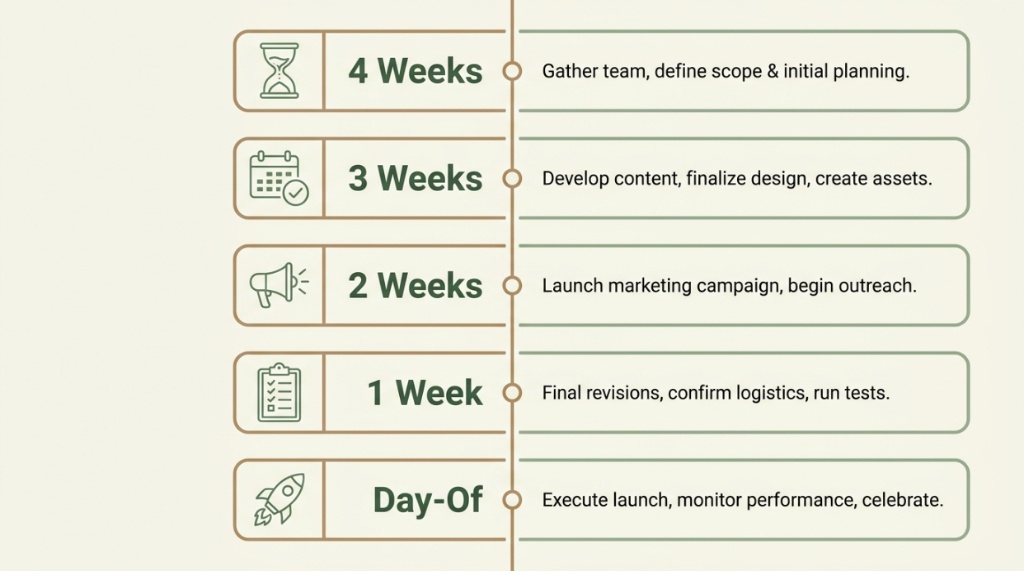
- 4 Weeks Out: Send digital invitations. Include your plastic-free note and gift-wrapping guidance. Start researching local Party Kit Network availability.
- 3 Weeks Out: Secure reusable dishware rental or order certified compostable tableware in bulk. Verify TUV/ASTM certifications before purchasing. Choose your theme (boho, rustic, minimalist, or woodland).
- 2 Weeks Out: Pre-order package-free treats from a local bakery in kraft paper bags. Source bulk snacks. Purchase or locate reusable decorations (bunting, honeycombs, fans).
- 1 Week Out: Gather natural decorative elements from the garden (ivy, pinecones, dried flowers). Test-unfold paper honeycombs. Prepare waste bin signage with photos. Make leaf confetti with a hole punch.
- Day of Event: Set up labelled waste sorting stations at gathering points. Brief any helpers on the disposal system. Arrange the BYOC leftover station. Take a breath—the planning is done.
Frequently Asked Questions
Can latex balloons be included in a truly plastic-free party?
While 100% natural latex (such as premium Qualatex brands) is derived from rubber trees and is technically biodegradable, it can take months to years to decompose in outdoor conditions. During that time, balloon fragments pose a documented threat to marine wildlife. For a strict plastic-free approach, replace latex balloons entirely with reusable paper fans, tissue pom-poms, or giant soap bubble stations.
How do I wrap party favors without plastic bags?
Use unlined brown kraft lolly bags tied with natural jute twine. For larger items, wrap in upcycled fabric scraps using traditional Japanese Furoshiki wrapping—the fabric itself becomes part of the gift. Newspaper with a sprig of dried lavender also works for a rustic aesthetic.
Are paper cups safe from plastic linings?
No. The majority of standard paper cups are lined with a hidden thin film of polyethylene (PE) or PLA to prevent leaking. This makes them non-compostable and non-recyclable in most municipal systems. Look specifically for cups labeled “100% unlined sugarcane bagasse” or those certified with water-based aqueous coatings. Always check for TUV or OK Compost HOME logos.
Where can I buy certified compostable party plates?
Search for “TUV OK Compost HOME certified plates” on eco-marketplace sites, or check specialty sustainable party suppliers in your region. In the UK, look for brands stocked by zero-waste shops. In the US, search for ASTM D6400 certified options on Amazon or dedicated eco-party retailers. Always verify the certification logo appears on the physical packaging—not just in the product listing description.
How much does a plastic-free party cost compared to a regular party?
Certified compostable tableware costs 20-40% more per unit than basic plastic. However, eliminating balloons, using garden decorations, sending digital invitations, and investing in reusable décor items often offsets or reduces the total cost. After building a small reusable party kit, subsequent events cost significantly less to decorate than conventional plastic-dependent ones.
What’s the best plastic-free party theme?
Boho, rustic garden, woodland explorer, and minimalist Scandinavian themes are all naturally plastic-free. Their core design elements—linen, terracotta, wood, dried botanicals, and cotton—require no synthetic materials and photograph beautifully for social sharing.
For the complete zero-waste event framework—including seasonal sourcing, vendor checklists, and reusable kit building guides—explore our detailed zero-waste party planning resource.

Similar Posts