How to Prepare Organic Green Tea the Traditional Japanese Way

Green tea is one of the most beloved drinks in the world. In Japan, however, it is far more than just a beverage. It is a daily ritual, a cultural tradition, and a form of mindful living that has existed for over a thousand years. Preparing organic green tea the traditional Japanese way connects you to that long and beautiful history.
Many people want to experience authentic Japanese tea at home. The good news is that it is simpler than it looks. You just need the right leaves, the right tools, and a little patience. This guide will walk you through every step clearly and easily. By the end, you will know exactly how to brew a perfect, satisfying cup.
The Rich History Behind Japanese Green Tea
Tea first arrived in Japan from China in the 9th century. Buddhist monks brought it back after studying abroad. They used it to stay alert during long meditation sessions. Over time, tea became a cornerstone of Japanese culture and spirituality.
By the 12th century, the samurai class had adopted tea as a symbol of discipline and focus. A formal practice called Chado, or the Way of Tea, slowly developed. This philosophy taught that every movement in the tea ceremony carried meaning. Therefore, preparation itself became an art form.
Today, Japanese green tea is celebrated worldwide. However, the traditional spirit of mindfulness behind it remains the same. When you prepare tea the Japanese way, you are not just making a drink. You are participating in a centuries-old practice of care and attention.
Popular Types of Japanese Organic Green Tea
Japan produces several varieties of green tea. Each has a distinct flavor, appearance, and preparation method. Understanding the differences will help you choose the right one for your taste and purpose.
Sencha
Sencha is the most widely consumed green tea in Japan. It has a bright, fresh flavor with a mild grassy note. Loose-leaf Sencha is the best choice for everyday traditional brewing at home. Additionally, it is widely available in organic form.
Matcha
Matcha is a finely ground powder made from shade-grown tea leaves. It has a rich, creamy, and slightly earthy taste. Matcha is central to the formal Japanese tea ceremony. Therefore, it requires its own specific tools and preparation steps.
Gyokuro
Gyokuro is one of the highest-grade Japanese green teas. It is shade-grown for several weeks before harvest, which creates a sweeter, more complex flavor. It requires cooler water and a longer steep than Sencha. However, the result is extraordinarily smooth and refined.
Hojicha
Hojicha is roasted green tea with a warm, toasty flavor. It contains less caffeine than other varieties. Therefore, it is a great option for evenings or for those who are caffeine-sensitive. It is also very easy to prepare.
How to Choose High-Quality Organic Green Tea Leaves
The quality of your tea leaves has a direct impact on the taste of your cup. Choosing well is therefore one of the most important steps in the entire process.
Always look for certified organic tea. This means the leaves were grown without synthetic pesticides or chemical fertilizers. Organic teas are safer for your body and often richer in flavor. The best Japanese teas come from the regions of Uji in Kyoto, Shizuoka, and Kagoshima.
When evaluating tea leaves, use your senses. Fresh leaves are bright green in color. They should have a clean, grassy, and slightly sweet aroma. Avoid any tea that looks dull or smells musty. Additionally, always choose loose-leaf tea over tea bags for a more authentic and flavorful brew.
Here are some practical tips for selecting great organic green tea:
- Check the harvest date on the packaging. Fresher leaves produce better tea.
- Buy from specialist Japanese tea shops or trusted online importers.
- Look for first-flush or spring harvest teas, which are considered the finest.
- Store your tea in an airtight, opaque container away from light, heat, and moisture.
Essential Tools for the Traditional Japanese Method
Having the right tools elevates the entire tea experience. You do not need to spend a fortune. However, using proper Japanese equipment makes a real difference in both the taste and the ritual.
Tools for Brewing Sencha and Gyokuro
- Kyusu: A small, side-handled ceramic teapot designed specifically for Japanese green tea.
- Yunomi: Small, handleless ceramic cups traditionally used for drinking everyday tea.
- Thermometer: A simple kitchen thermometer to measure water temperature accurately.
- Digital timer: To track steeping time with precision.
- Tea tray or cloth: To protect your surface and collect any drips during pouring.
Tools for Preparing Matcha
- Chawan: A wide, deep ceramic bowl used for both preparing and drinking Matcha.
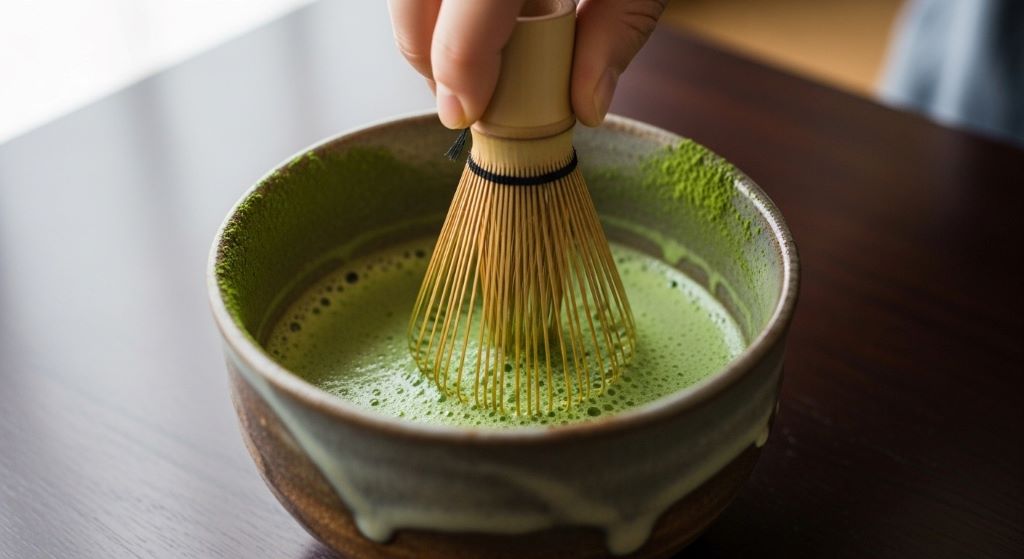
- Chasen: A fine bamboo whisk with over 80 tines, used to blend powder and water.
- Chashaku: A slender bamboo scoop used to measure Matcha powder.
- Fine sieve or Furui: Used to sift the Matcha before preparing, removing any lumps.
- Small jug or spouted cup: For controlled pouring of hot water into the Chawan.
Why Water Quality and Temperature Matter So Much
Water is the foundation of any great cup of tea. Poor water will ruin even the finest organic leaves. Therefore, always use filtered or spring water. Tap water with high chlorine or mineral content will interfere with the delicate flavors of Japanese green tea.
Temperature is equally critical. Green tea is far more sensitive to heat than black tea. Boiling water will scorch the leaves and produce a harsh, overly bitter cup. This is the most common mistake beginners make.
Here are the correct temperature guidelines for each tea type:
- Sencha: 70°C to 80°C (158°F to 176°F)
- Gyokuro: 50°C to 60°C (122°F to 140°F)
- Matcha: 70°C to 80°C (158°F to 176°F)
- Hojicha: 90°C to 95°C (194°F to 203°F)
If you do not have a thermometer, boil fresh water and then let it rest. Allow it to cool for three to four minutes before using it for Sencha or Matcha. For Gyokuro, wait a full five to six minutes.
Step-by-Step Guide to Brewing Traditional Sencha
Sencha is the perfect starting point for anyone new to Japanese tea. The steps are straightforward. Additionally, the process is deeply satisfying once you get into the rhythm.
Step One: Warm Your Equipment
Pour a small amount of hot water into your Kyusu and your Yunomi cups. Swirl the water gently, then discard it. This pre-warming keeps the tea at a stable temperature and prevents a sudden heat shock when you add the tea water. It is a small step, but it matters.
Step Two: Measure and Add Your Leaves
Add one heaped teaspoon of loose-leaf organic Sencha per cup directly into the Kyusu. For two cups, use two teaspoons. Traditional Japanese brewing uses a generous amount of leaves. Do not be afraid to measure properly, as too few leaves will produce a weak and flat result.
Step Three: Pour the Water at the Right Temperature
Heat your filtered water to around 75°C. Pour it slowly and gently over the leaves in the Kyusu. Use approximately 150 to 180 milliliters of water per cup. Avoid pouring the water directly and forcefully onto the leaves, as this can damage their structure and affect the flavor.
Step Four: Steep with Careful Timing
Place the lid on the Kyusu and steep for exactly one minute for a bright, sweet cup. You can extend to ninety seconds if you prefer a slightly stronger flavor. However, do not exceed two minutes. Over-steeping releases excess tannins, which makes the tea bitter and unpleasant.
Step Five: Pour Evenly and Completely
Pour the tea into the Yunomi cups in small, rotating amounts. This technique, called mawashitugi in Japanese, ensures every cup receives the same concentration of flavor. Finally, tip the Kyusu fully so that every last drop is poured out. These final drops are considered the most concentrated and flavorful part of the brew.
Step-by-Step Guide to Preparing Traditional Matcha
Matcha preparation is slightly more involved than Sencha. However, the process becomes meditative and enjoyable once you practice it a few times. The result is a vibrant, frothy, and deeply nourishing bowl of tea.
Step One: Warm the Chawan
Pour a small amount of hot water into your Chawan. Swirl it gently and then discard it. Use a clean cloth to dry the bowl thoroughly. A dry, warmed bowl ensures the Matcha whisks evenly and the foam forms properly.
Step Two: Sift the Matcha Powder
Measure one to two chashaku scoops of organic Matcha powder, which equals roughly one teaspoon, into your fine sieve. Sift it directly into the Chawan. Sifting breaks up clumps and makes the powder much easier to whisk smoothly. This step is often skipped, but it makes a significant difference in texture.
Step Three: Add the Hot Water
Pour 70 to 80 milliliters of water at 75°C into the Chawan. For a thicker, more intense style called Koicha, use only 40 milliliters. For the lighter, more everyday style called Usucha, use the full 70 to 80 milliliters. Usucha is the most common style prepared at home.
Step Four: Whisk Vigorously
Hold the Chawan steady with your non-dominant hand. Using the Chasen in your other hand, whisk briskly in a W or M shape across the surface of the liquid. Do not stir in circles, as this will not produce the desired froth. Continue whisking for 20 to 30 seconds until the surface is covered with a fine, creamy foam. Good froth indicates a perfectly prepared Matcha.
Step Five: Drink with Mindfulness
Before drinking, rotate the Chawan two quarter-turns so the front of the bowl faces away from you. This is a traditional gesture of respect for the craftsmanship of the bowl. Lift the bowl with both hands. Sip slowly and let the rich, umami flavor fill your palate. There is no need to rush.
Practical Tips for a More Authentic Experience
Brewing Japanese green tea well is partly about technique and partly about mindset. The traditional Japanese philosophy of tea encourages you to slow down. It asks you to be present and deliberate in every action. Here are some helpful tips to deepen your practice at home.
- Prepare your tea in a clean, quiet space. Remove distractions and allow yourself to focus.
- Always use ceramic or clay tools. Avoid plastic or metal, which can affect the taste.
- Rinse and dry your Chasen carefully after every use to preserve its shape and bristles.
- Try a second steeping with Sencha. The second infusion is sweeter and gentler than the first.
- Pair your tea with Japanese sweets such as Wagashi. The sweetness balances the tea’s natural bitterness beautifully.
- Take a moment before drinking to hold the cup with both hands. This small gesture honors the spirit of the tea ceremony.
The Health Benefits of Organic Japanese Green Tea
Organic Japanese green tea is one of the most nutrient-rich beverages you can enjoy. It contains powerful antioxidants called catechins, particularly EGCG (epigallocatechin gallate). These antioxidants help protect the body from cellular damage and support long-term health.
Additionally, green tea contains L-theanine, a unique amino acid that promotes a state of calm, focused alertness. It works together with caffeine to improve concentration without causing the jittery side effects associated with coffee. This combination is one reason why Zen monks traditionally drank green tea before meditation.
Regular consumption of organic green tea has also been linked to better heart health, improved digestion, and stronger immune function. Furthermore, because organic tea is grown without synthetic chemicals, it is a cleaner and safer choice for your body. Therefore, making the switch to organic is a worthwhile investment in your wellbeing.
Conclusion
Preparing organic green tea the traditional Japanese way is a rewarding and enriching practice. It begins with choosing the right organic leaves from trusted Japanese regions. It continues with using proper tools, filtered water, and precise temperatures. Whether you are brewing a bright cup of Sencha or a creamy bowl of Matcha, every step is an act of care.
The traditional method is not difficult to learn. However, it does ask you to slow down and pay attention. That mindful quality is exactly what makes Japanese tea culture so meaningful and lasting. Additionally, the health benefits of organic green tea make it a wise daily habit for both body and mind.
Start simple. Choose one type of tea and practice the steps consistently. Over time, the process will feel natural and deeply satisfying. A perfectly prepared cup of organic Japanese green tea is always worth the effort.
Frequently Asked Questions
1. What water temperature is best for organic Japanese green tea?
The ideal temperature depends on the type of tea. Sencha and Matcha brew best at 70°C to 80°C (158°F to 176°F). Gyokuro requires cooler water, around 50°C to 60°C (122°F to 140°F). Always avoid boiling water, as it burns the delicate leaves and creates bitterness. If you lack a thermometer, let boiled water rest for three to five minutes before using it.
2. Can Japanese green tea leaves be steeped more than once?
Yes, absolutely. High-quality loose-leaf teas such as Sencha and Gyokuro can be steeped two to three times. Each infusion produces a slightly different flavor profile. The second steep tends to be sweeter and more delicate than the first. However, Matcha is a powder fully dissolved in water, so it cannot be re-steeped.
3. What is the main difference between Sencha and Matcha?
Sencha uses whole loose leaves that are steeped in water and then removed. Matcha is made from shade-grown leaves that are stone-ground into a fine powder. The powder is whisked directly into the water, so you consume the entire leaf. As a result, Matcha is richer in antioxidants and caffeine per serving. It also requires its own dedicated set of tools.
4. Why should I choose organic green tea over non-organic varieties?
Organic green tea is grown without synthetic pesticides, herbicides, or artificial fertilizers. This means your cup is free from potentially harmful chemical residues. Additionally, organic farming methods are more sustainable and better for the environment. Many tea drinkers also find that organic leaves have a cleaner, more natural flavor than their conventionally grown counterparts.
5. How do I store organic green tea to keep it fresh for as long as possible?
Store loose-leaf organic green tea in an airtight, opaque container in a cool, dry place. Keep it away from light, strong odors, heat, and moisture, all of which degrade its flavor quickly. For Matcha, seal the tin tightly and store it in the refrigerator after opening. Use it within four to six weeks of opening for the best flavor and color.
Related Topics:
Organic Green Tea Leaf Oxidation Levels Guide
What Are Eco-Friendly Flooring Options Using Natural Plant Fibers

Similar Posts